
AI Enters Nigerian Classrooms as Digital Learning Expands
Artificial intelligence and other digital learning tools are gaining a foothold in Nigerian classrooms as UNICEF, Airtel Africa and government partners expand access to online educational resources and skills development.
Reports published on October 21 and 22, 2026, say the initiative has connected nearly 2,000 schools, reached about one million students and involved more than 20,000 teachers. More than 19,000 teachers have reportedly received digital-literacy training under the partnership.
The development was highlighted during visits by a joint UNICEF–Airtel Africa delegation to selected schools and youth programmes in Lagos, followed by engagements with government officials in Abuja.
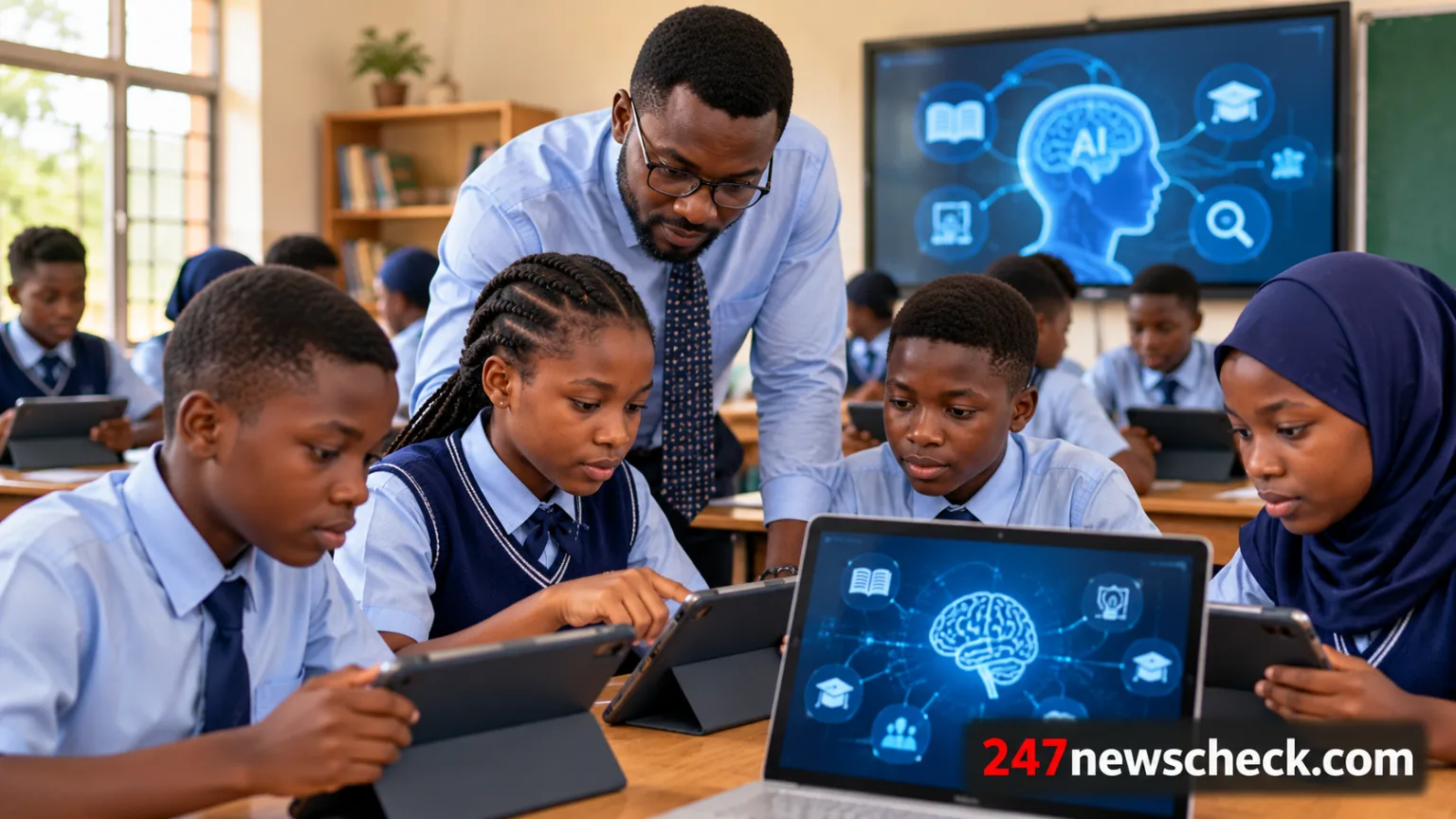
At Government Senior College in Agege and St George’s U.N.A. Primary School in Lagos, students and teachers demonstrated how digital tools, including artificial intelligence, are being used to support classroom activities.
The delegation also visited Yaba College of Technology, where young people demonstrated digital-skills and employability programmes intended to help them prepare for work, entrepreneurship and further opportunities.
The initiative reflects a growing effort to connect education with the digital economy. However, expanding access to technology is only one part of the challenge. Schools also need suitable equipment, dependable connectivity, trained teachers, quality learning materials and effective safeguards for children.
What the Digital-Learning Partnership Offers
The collaboration between Airtel Africa and UNICEF forms part of a wider programme to improve access to digital education across African countries, working with national governments and other partners.
In Nigeria, the programme supports access to selected learning platforms through zero-rated data services. This arrangement allows eligible users to access participating educational platforms without incurring ordinary mobile data charges for that eligible traffic.
The platforms reported as part of the Nigerian initiative include:
Nigeria Learning Passport: A digital-learning platform offering educational content for children and young people.
Inspire and Ignite: Federal Ministry of Education platforms supporting learning and skills development.
Digital National Education Management Information System: A government education information platform.
Youth Agency Marketplace (YOMA): A digital platform connecting young people with learning, skills-development and opportunity pathways.
Passport to Earning: A programme designed to help young people develop skills relevant to employment and livelihoods.
The availability of these platforms does not mean every student automatically has a device, reliable electricity or unrestricted internet access. Zero-rated access also applies to participating services and should not be confused with free access to every website, application or online resource.
The practical benefit for each learner therefore depends on the devices available, the school’s infrastructure, the content offered and whether students and teachers can use the platforms effectively.
How Artificial Intelligence Could Support Learning
AI tools can help students explore concepts, practise skills, obtain explanations and engage with digital learning materials. Teachers may also use appropriate tools to prepare lessons, develop exercises and support different learning needs.
Used carefully, such technology could help teachers supplement classroom instruction and give students additional opportunities to practise what they learn.
But AI is not a substitute for qualified teachers or a guarantee of better educational outcomes. Systems can produce inaccurate answers, reflect bias or provide explanations that are inappropriate for a learner’s age or curriculum.
Students therefore need guidance on checking information, recognising errors, protecting personal information and understanding when AI-generated answers should not be accepted without verification.
Teachers also need practical training that goes beyond learning how to operate a device. Effective training should help them decide when technology improves a lesson, how to evaluate digital content and how to ensure students remain actively engaged in learning.
The reported digital-literacy training is an important step, but the number of teachers trained does not, by itself, establish how frequently the tools are used or whether students’ learning outcomes have improved.
The Connectivity Gap Remains a Major Challenge
Digital education can widen opportunities, but it can also deepen existing inequalities if access is uneven.
Some schools have computer laboratories, reliable electricity and stable internet connections. Others struggle with insufficient equipment, limited power supply, overcrowded classrooms and poor connectivity.
Students who depend on shared devices may have less time to practise than classmates with personal computers or tablets. Children in remote communities may also find it harder to use online materials consistently.
The programme’s reported reach is significant, but the figures should be examined alongside questions about the quality and regularity of access.
How many connected schools have working devices available for students? How often can learners use the platforms? Are schools receiving technical support when equipment fails? Are rural and underserved communities receiving a fair share of the programme’s benefits?
These questions matter because connecting a school to the internet is not the same as ensuring that every child can use digital resources regularly.
Offline access, suitable devices, dependable power and continued maintenance may be necessary to make digital learning useful in schools where infrastructure remains limited.
Can Teachers Turn Digital Access into Better Learning?
Teachers are central to whether technology improves classroom education. Digital platforms can provide additional material, but teachers must still explain difficult concepts, assess students’ understanding, identify learning gaps and help children develop critical thinking skills.
The partnership’s teacher-training component is therefore an important measure of its potential impact. However, the reported figure of more than 19,000 trained teachers needs to be considered alongside the depth of the training, access to ongoing support and evidence of classroom use.
Teachers should receive guidance on integrating digital tools into existing lessons rather than simply adding screen time. They also need clear procedures for handling inaccurate AI responses, inappropriate content, plagiarism and students’ overdependence on automated answers.
For schools to benefit over the long term, professional development should be continuous and practical. Teachers need opportunities to share successful methods, report technical problems and receive support as educational technology changes.
Protecting Children’s Privacy and Online Safety
The expansion of digital learning also makes child protection and data privacy important considerations.
Educational platforms can involve student accounts, learning records, usage information and other data. Schools and programme partners should make clear what information is collected, why it is needed, who can access it and how long it is retained.
Children should not be required to disclose unnecessary personal information to use learning resources. Where AI tools are involved, schools should understand how student prompts, uploaded work and account information are processed, including whether information is shared with third parties or used to improve AI systems.
Parents, teachers and students also need age-appropriate guidance on strong passwords, suspicious links, cyberbullying, harmful content and the responsible use of AI.
These are essential questions for any digital-education programme. The public information reviewed for this report does not establish the full details of the initiative’s data-protection arrangements or confirm that every participating school has a comprehensive AI-use policy.
Government education authorities and programme partners should make the applicable safeguards clear and ensure that schools have practical procedures for reporting online safety concerns.
Will Girls and Underserved Children Benefit Equally?
The programme’s impact will depend not only on the number of schools connected but also on who gets to participate.
Children with disabilities may require accessible interfaces, assistive technology or learning materials adapted to their needs. Girls may face barriers to device access or participation in some communities, while low-income households may struggle to provide devices or reliable electricity for learning outside school.
UNICEF has stressed the importance of ensuring that girls, children with disabilities and learners in underserved communities are included in the expansion.
Monitoring participation by location, gender, disability and other relevant factors could help identify groups that are not benefiting equally. The results should inform decisions about where to direct equipment, teacher support and additional connectivity.
Digital learning will have limited value as an inclusion strategy if the children who need additional educational support remain unable to access it.
From Reaching Students to Measuring Learning Outcomes
The reported reach of nearly one million students is an important indicator of programme scale. But reach is not the same as educational achievement.
To understand whether the initiative is working, stakeholders need transparent information on how frequently students use the platforms, which subjects and age groups benefit, whether teachers incorporate the tools into lessons and whether learning outcomes improve over time.
It is also important to distinguish students reached through this specific partnership from users registered on individual platforms. The reported figures may describe different measures, so they should not automatically be added together or treated as identical.
A useful assessment would examine access, regular use, learning progress, teacher confidence, technical reliability and the programme’s cost over time.
Public reporting on these measures would help parents, schools and policymakers judge whether the investment is producing meaningful benefits rather than simply increasing the number of connected institutions.
What Government and Partners Need to Do Next
The next phase should focus on making digital access dependable, inclusive and educationally effective. Government education authorities and programme partners can strengthen the initiative by:
1. Publishing clear progress updates: Explain what the school, student and teacher figures measure and how they are verified.
2. Supporting teachers continuously: Provide practical training, classroom guidance and technical assistance.
3. Improving infrastructure: Address gaps in devices, electricity, connectivity and equipment maintenance.
4. Strengthening child protection: Make privacy, online safety and responsible AI-use requirements clear to schools and families.
5. Prioritising underserved learners: Track participation and direct additional support to communities facing the greatest barriers.
6. Measuring learning outcomes: Report evidence of improved learning, not only the number of people reached.
These steps would help turn digital connectivity into a more sustainable educational resource.
Conclusion
The expansion of digital learning involving UNICEF, Airtel Africa and Nigerian government partners offers an opportunity to connect more students with educational resources and prepare young people for a technology-driven economy.
Reports that nearly 2,000 schools and about one million students have been reached indicate the scale of the initiative. Yet the longer-term impact will depend on whether students can access the tools consistently, teachers can use them effectively and schools have appropriate protections for children.
Artificial intelligence may become a useful addition to Nigerian classrooms, but it must support sound teaching rather than replace it. Reliable infrastructure, inclusive access, teacher development, student privacy and measurable learning outcomes will determine whether the promise of digital education translates into meaningful progress.
This report is published by 247NewsCheck — Trusted News. 24/7.
Source Attribution
UNICEF Nigeria — UNICEF, Airtel Africa and the Government of Nigeria advance digital learning following Lagos and Abuja visits, 22 October 2026.
Punch Newspapers — UNICEF, Airtel, FG expand digital learning to 2,000 Nigerian schools, 21 October 2026.
BusinessDay — AI enters Nigerian classrooms as Airtel, UNICEF expand digital learning, 22 October 2026.
Airtel Africa Foundation — information on the UNICEF digital-learning partnership and zero-rated learning platforms.