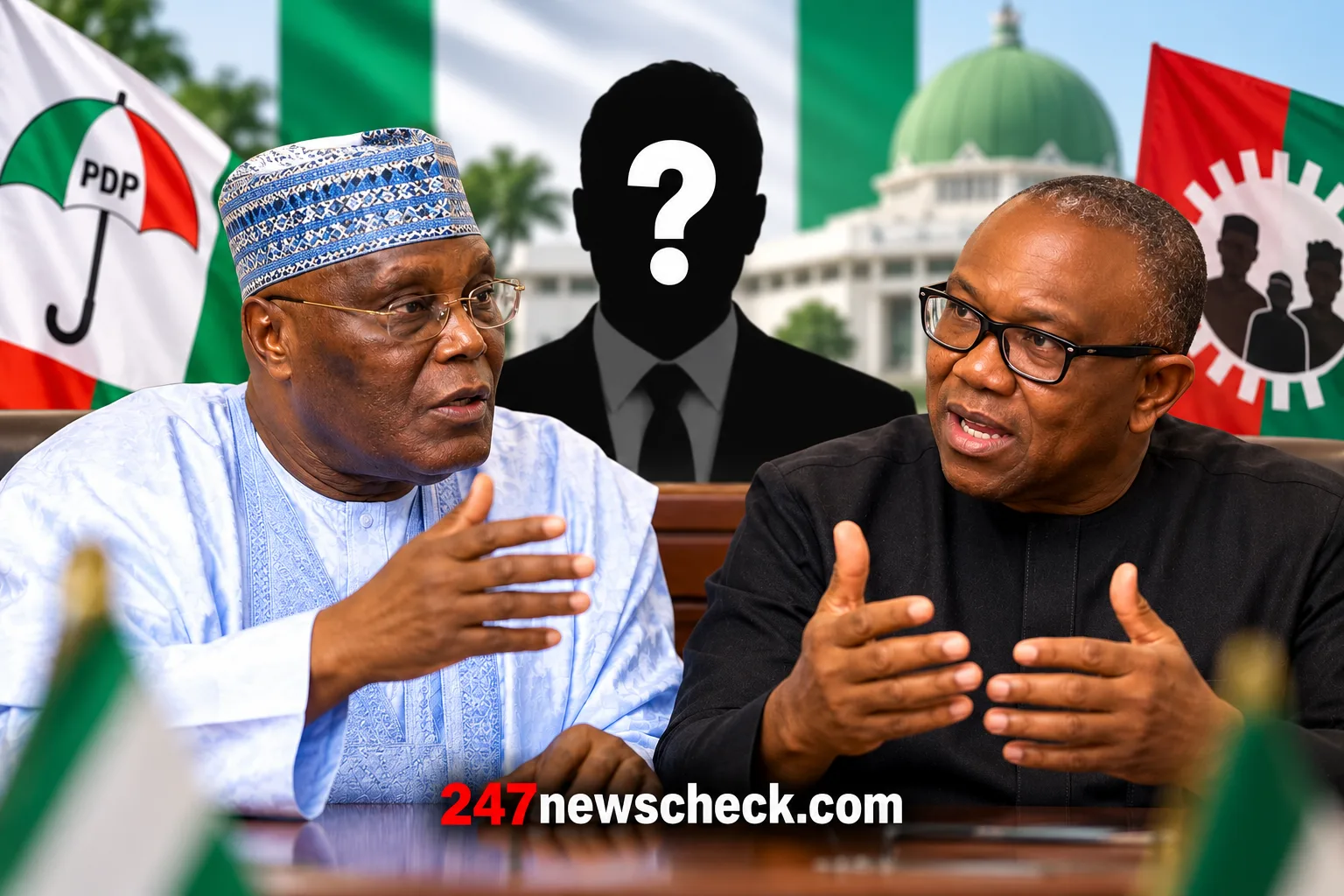
Efforts to build a united opposition front ahead of Nigeria's 2027 presidential election are gathering momentum, with the G100 coalition reporting progress in negotiations involving former Vice-President Atiku Abubakar, former Anambra State Governor Peter Obi and other political figures seeking a common strategy against the ruling All Progressives Congress (APC).
The development follows consultations among opposition parties and presidential contenders, as coalition leaders attempt to move discussions beyond broad calls for unity towards a workable agreement on candidate selection, political cooperation and the structure of a common platform.
In a report published on October 22, 2026, The Guardian quoted the G100 coalition as expressing confidence that negotiations were advancing. The coalition also announced the inauguration of legal and media committees intended to support the process.
Despite the reported progress, the emergence of a single consensus candidate has not been conclusively established. The competing ambitions of opposition politicians, the interests of their respective parties and the question of how a candidate would be selected remain central to the negotiations.
Coalition seeks to turn consultations into an agreement
The G100 initiative is part of a broader effort by opposition stakeholders to coordinate their political activities before the 2027 presidential election.
Participating parties identified in recent reports include the African Democratic Congress (ADC), the Nigeria Democratic Congress (NDC), the Peoples Democratic Party (PDP), the Social Democratic Party (SDP), the Peoples Redemption Party (PRP) and the Allied Peoples Movement (APM).
The consultations have involved prominent political figures, including Atiku, Obi, Oyo State Governor Seyi Makinde, former Cross River State Governor Donald Duke and SDP politician Adewole Adebayo.
The discussions reflect a recognition among participating stakeholders that cooperation could help the opposition present a more coordinated challenge to the APC. However, agreeing on the need for unity is different from reaching a binding decision on who should lead a joint presidential ticket.
The legal and media committees are expected to help address issues surrounding the proposed arrangement, including legal risks, negotiations among participating parties and the coordination of public communication.
Candidate selection remains the central challenge
The most difficult question facing the opposition is how to choose a consensus candidate from among politicians who have their own ambitions, supporters and political organisations.
Atiku and Obi remain influential figures in the opposition, with established political networks and constituencies. Any agreement involving either politician would have to address the expectations of supporters and the interests of the parties backing their respective presidential ambitions.
Other contenders could also seek assurances that the selection process would be transparent and fair. Without an agreed procedure, discussions over a common candidate could become a source of disagreement rather than a foundation for cooperation.
Possible approaches include negotiations based on mutually accepted criteria, a consensus arrangement reached by the participating parties or a competitive selection process under agreed rules. The precise method that will govern the current initiative must be confirmed by the coalition.
The outcome will depend not only on the popularity of individual contenders but also on whether the parties can agree on a process they consider legitimate.
Legal and organisational questions require attention
Political cooperation across multiple parties presents practical and legal questions that cannot be resolved by public declarations alone.
The participating organisations must determine how their arrangement will operate, how disagreements will be handled and how any eventual agreement will be implemented within the applicable electoral and party rules.
The legal committee's role is therefore important. A political understanding that fails to account for relevant legal requirements could encounter difficulties during implementation.
The media committee also has a significant task: communicating developments accurately and consistently while avoiding premature claims that an agreement has already been reached.
Clear communication will be particularly important as supporters and the wider electorate seek to understand whether the coalition is making substantive progress or simply continuing consultations.
What opposition unity could mean for the 2027 election
A coordinated opposition could potentially reduce fragmentation among voters who prefer an alternative to the incumbent administration. It could also create opportunities for parties to coordinate policy proposals, campaign resources and political outreach.
However, unity does not automatically guarantee electoral success. The strength of any arrangement would depend on its policy platform, the credibility of its candidate, public acceptance, organisational capacity and ability to address voters' concerns.
Nigerians will also expect a coalition to explain what it intends to do about major national issues, including the cost of living, employment, insecurity, public services and economic opportunity.
A credible agreement would therefore need to go beyond deciding who occupies the presidential ticket. It would also need to establish a coherent programme and clarify how the participating parties intend to work together if elected.
Negotiations face a decisive test
The G100 coalition's reported progress marks another stage in the opposition's attempt to develop a common strategy ahead of the 2027 election. Yet the most important test remains whether consultations can produce a transparent, accepted and workable agreement.
Until the coalition formally confirms its candidate-selection process and the participating parties publicly endorse the resulting arrangement, claims that a consensus candidate has been secured should be treated cautiously.
For Atiku, Obi and other opposition figures, the coming negotiations will test whether their political interests can be reconciled with the broader objective of presenting Nigerians with a coordinated electoral alternative.
247NewsCheck.com will continue to follow verified developments in the opposition negotiations and report confirmed decisions as they emerge.