
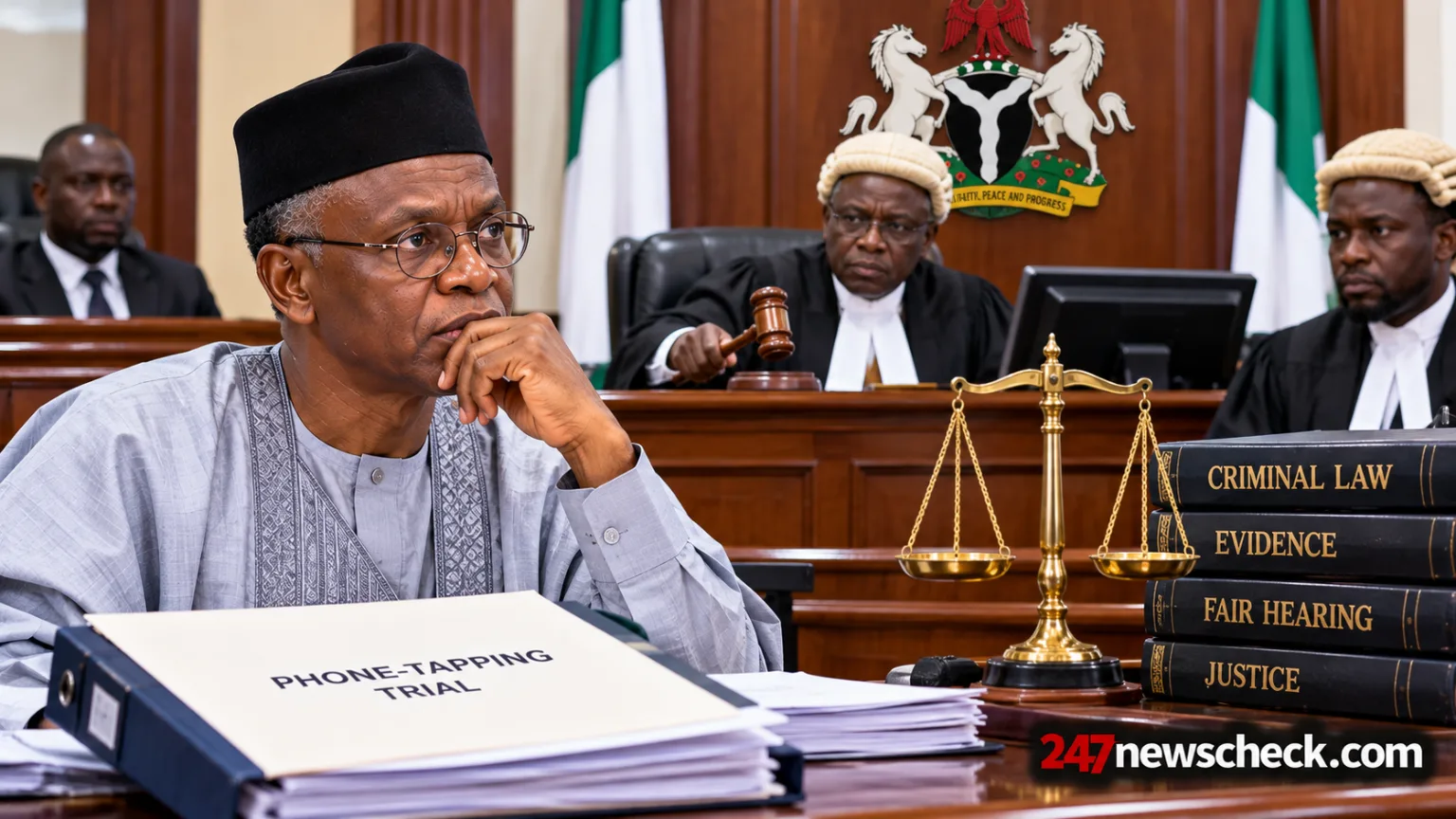
A Federal High Court in Abuja has ordered former Kaduna State Governor Nasir El-Rufai to enter his defence in a criminal trial over the alleged unlawful interception of telephone communications linked to National Security Adviser Nuhu Ribadu.
The order followed the court’s dismissal of a no-case submission filed by El-Rufai, who had asked the court to discharge and acquit him on the grounds that the prosecution had not presented sufficient evidence to require him to defend himself.
Justice Joyce Abdulmalik delivered the ruling on Monday, October 26, 2026, holding that the evidence presented by the Department of State Services (DSS), which instituted the case, was sufficient for the proceedings to advance to the defence stage.
The court adjourned the matter until November 25, 2026, when El-Rufai is expected to begin presenting his defence if he chooses to do so.
Court rejects request to terminate proceedings
El-Rufai filed the no-case submission after the prosecution closed its case following the testimony of two witnesses.
Through his legal representatives, the former governor argued that the evidence before the court did not establish a sufficient basis for requiring him to answer the allegations. His application sought to end the proceedings without calling a defence.
The prosecution opposed the application, maintaining that its oral and documentary evidence established a case requiring a response from the defendant.
Prosecution counsel Oluwole Aladedoye, a Senior Advocate of Nigeria, reportedly drew the court’s attention to a document identified as Exhibit B, which the prosecution said contained an alleged admission concerning the interception of Ribadu’s telephone communications.
The court rejected El-Rufai’s request for discharge at this stage and directed that the trial proceed.
Background to the alleged phone interception
The case arose from comments El-Rufai made during an interview on Arise Television’s Prime Time programme in February 2026. During the interview, he reportedly said that someone had intercepted Ribadu’s telephone communications, enabling him to hear a conversation in which the national security adviser allegedly instructed security operatives to arrest him.
The DSS subsequently brought charges against the former governor over the alleged unlawful interception. The case is being heard under a five-count amended charge, according to reports of the proceedings.
The prosecution’s case and the statements attributed to El-Rufai remain matters to be examined through the judicial process. Allegations presented by prosecutors should not be treated as established facts unless proved in court.
What the ruling means
A no-case submission is an application asking a court to end a case on the basis that the prosecution’s evidence is insufficient to require the defendant to present a defence.
By dismissing El-Rufai’s application, the court determined that the case should proceed beyond the prosecution stage. The ruling does not amount to a conviction and does not, by itself, establish that the allegations against him are true.
El-Rufai remains entitled to present his defence and challenge the prosecution’s evidence as the trial continues. The court will ultimately have to determine the case on the evidence and applicable law.
The next scheduled date, November 25, will be an important stage in the proceedings as the defence phase is expected to begin.
247NewsCheck.com will continue to monitor the El-Rufai phone-tapping trial and report further developments as they are confirmed through reliable sources and court proceedings.