Nepal is a country where dramatic mountain landscapes meet centuries of history, religious traditions, colourful celebrations and a remarkable variety of cultural identities. Located in South Asia between India and China, the Himalayan nation is internationally recognised for Mount Everest, historic temples, Buddhist heritage, traditional handicrafts and the hospitality associated with many of its communities.
Yet Nepal is much more than its mountains. Its identity is shaped by people from different ethnic backgrounds, languages, religions and regions, each contributing to the country's distinctive cultural landscape.
From the traditional clothing worn during ceremonies to the meals shared at family gatherings, Nepali life reflects a close relationship between heritage, community, spirituality and changing modern lifestyles.
For readers discovering Nepal through its people, clothing and customs, the country offers a fascinating look at how old traditions continue alongside contemporary life.
1. Where Is Nepal?
Nepal is a landlocked country in South Asia, bordered by India to the south, east and west, and China to the north. Its capital and largest city is Kathmandu, a major centre of government, trade, education, religion and cultural heritage.
The country is home to part of the Himalayan mountain range, including Mount Everest, the world's highest mountain above sea level. Nepal's geography stretches from the high Himalayan region through hills and valleys to the warmer plains of the Terai.
These differences in landscape influence how people live, what they grow and eat, the clothing suited to their environment, and the customs practised in different communities.
Mountain villages, historic urban settlements, farming communities and modern cities all contribute to Nepal's national identity.
2. The People, Languages and Ethnic Diversity of Nepal
Nepal is culturally diverse, with many ethnic and Indigenous communities maintaining their own languages, traditions, clothing, music, food and celebrations.
The country's communities include Newar, Tamang, Sherpa, Gurung, Magar, Tharu, Rai, Limbu, Thakali, Madhesi and many others. These names represent distinct communities, and their customs should not be treated as interchangeable.
Nepali is the country's official language and is widely used in public life. Other languages spoken across the country include Maithili, Bhojpuri, Tharu, Tamang, Nepal Bhasa, Magar and many more.
The 2021 national census recorded 142 ethnicities and 123 spoken languages, illustrating the scale of Nepal's cultural and linguistic diversity.
In the Kathmandu Valley, Newar communities are especially associated with distinctive architecture, festivals, craftsmanship and cuisine. In the Himalayan region, Sherpa and other mountain communities have developed cultural traditions shaped partly by their environment and historical connections across the Himalayas. Communities in the Terai plains have their own languages, agricultural traditions and celebrations.
This diversity is one of Nepal's defining characteristics. There is no single way to describe every Nepali person's identity, lifestyle or beliefs.
3. Traditional Nepali Dressing: Sarees, Daura Suruwal and Ethnic Clothing
Traditional clothing is an important part of Nepali cultural expression. The garments people wear may reflect their community, region, family tradition, religious occasion, profession or personal preference.
The saree
The saree, also spelled sari, is a long piece of fabric wrapped and draped around the body, usually worn with a blouse. Sarees are common among many Nepali women, particularly for celebrations, weddings, religious events and formal gatherings.
They come in different colours, fabrics, patterns and styles. Red, black, gold, green and other colours may appear depending on the garment, the occasion and the wearer's preferences.
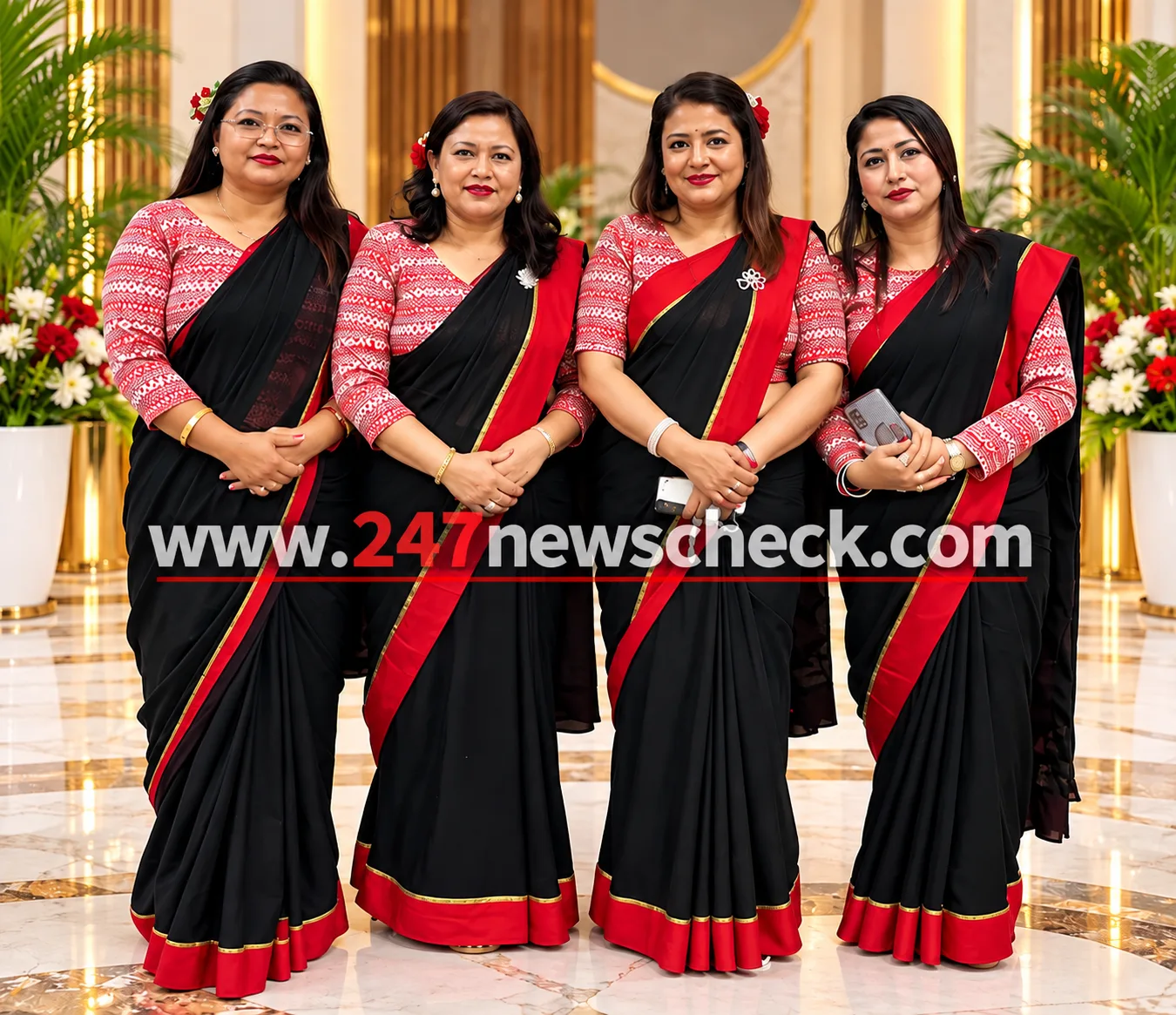
The women shown in the accompanying photograph wear coordinated black sarees with red borders and patterned red blouses. Their clothing can be described as formal traditional South Asian attire. However, the saree itself is worn in several countries and does not identify a woman's precise ethnic community or nationality on its own.
Gunyu cholo
Gunyu cholo is a traditional outfit associated with Nepali girls and women in certain communities and ceremonial settings. Its use and design vary, and it should not be presented as the everyday clothing of all Nepali women.
Daura suruwal and Dhaka topi
Daura suruwal is a well-known traditional outfit for men. It generally consists of a wrapped or overlapping tunic and fitted trousers. It may be worn with a waistcoat or coat for formal occasions.
The Dhaka topi is a distinctive patterned cap associated with Nepali identity and is often worn with traditional formal clothing. Dhaka fabric is also used for other garments and accessories.
Clothing across Nepal's communities
Traditional clothing differs among Newar, Tamang, Gurung, Magar, Tharu, Sherpa, Rai, Limbu and other communities. Some garments feature distinctive weaving, jewellery, headwear or ceremonial accessories.
In modern cities such as Kathmandu and Pokhara, Western-style clothing is also widely worn. Traditional dress remains visible during festivals, weddings, cultural programmes, religious ceremonies and official events.
Clothing in Nepal is therefore not simply about fashion. It can be a way of expressing heritage, belonging, celebration and respect for cultural traditions.
4. Nepali Food: Dishes That Bring People Together
Food is central to family life and hospitality in Nepal. The country's varied geography and cultural influences have produced a wide range of dishes, from everyday rice and lentil meals to dumplings, fermented foods and elaborate regional specialities.
Dal bhat tarkari
Dal bhat tarkari is one of the best-known meals in Nepal. It typically combines dal, or lentil soup; bhat, or cooked rice; and tarkari, or vegetables prepared with spices. Pickles and other accompaniments may be served alongside the meal.
The ingredients and portion sizes vary from household to household and from one region to another. For many families, this combination is a familiar everyday meal.
Momos
Momos are dumplings that may be steamed or fried and filled with vegetables, meat or other ingredients. They are served with dipping sauces and are popular in restaurants, homes and street-food settings.
Although momos are closely associated with Himalayan and Tibetan culinary traditions, they have become a much-loved part of Nepal's wider food culture.
Sel roti
Sel roti is a ring-shaped, deep-fried rice-flour bread that is especially associated with festivals and celebrations. Its slightly sweet taste and crisp exterior make it a familiar festive food in many Nepali households.
Newari cuisine
Newar communities of the Kathmandu Valley have a distinctive and extensive food tradition. Newari dishes are served during family gatherings, festivals and religious occasions, and can include a variety of rice-based foods, snacks, meat preparations and fermented ingredients.
Thakali food
Thakali cuisine, associated with the Thak Khola region and the Thakali community, is well known for balanced meals featuring rice or other grains, lentils, vegetables, pickles and, depending on the meal, meat.
Dhido and other regional foods
Dhido is a thick staple food prepared by cooking flour, often made from millet, buckwheat or other grains, in water. It is eaten in some households with vegetables, lentils, pickles or meat dishes.
Food traditions differ across the Himalayan region, the middle hills, the Kathmandu Valley and the Terai. Religious beliefs, local crops, climate and family customs can all influence what people eat.
5. Nepali Weddings: Family, Tradition and Celebration
Weddings are important social occasions in many Nepali communities. They can bring together extended families, friends, neighbours and members of the wider community for ceremonies, meals, music and celebration.
However, Nepal has no single wedding tradition. The rituals followed depend on religion, ethnicity, family preferences, location and the couple's wishes.
Choosing a wedding date
In some Hindu families, a priest or astrologer may help identify an auspicious date based on traditional astrological considerations. Other couples choose dates according to practical arrangements, personal preference or a combination of family and religious considerations.
Traditional Hindu wedding ceremonies
Hindu weddings in Nepal may include rituals such as the exchange of garlands, blessings from elders, sacred vows and ceremonies conducted around a sacred fire. Practices vary, and the details should not be assumed to be identical in every community.
Red is a prominent colour in many Nepali Hindu wedding traditions. Brides may wear red sarees or other richly decorated outfits, with jewellery and accessories chosen for the ceremony. Some married Hindu women also wear symbols associated with marriage, such as sindoor or particular necklaces, depending on family and regional custom.
Buddhist and Indigenous wedding traditions
Buddhist, Indigenous and other communities have their own approaches to marriage. Ceremonies may involve family blessings, community gatherings, symbolic gifts, religious practices, traditional songs or local customs.
In some communities, traditional music and dance form an important part of wedding celebrations. Family members may prepare special meals, welcome guests and participate in several events over more than one day.
Arranged marriages and love marriages
Both arranged marriages and marriages based on romantic relationships exist in Nepal. Family involvement remains important in many settings, but practices are changing as education, migration, urbanisation and individual choice influence relationships.
It would be inaccurate to assume that all Nepali marriages are arranged or that every family follows the same rules.
At their heart, many wedding celebrations provide an opportunity to recognise the couple, bring families together and maintain connections with cultural heritage.
6. Major Festivals Celebrated in Nepal
Nepal's calendar includes numerous festivals shaped by Hindu, Buddhist, Indigenous and other religious traditions. Celebrations can differ significantly between communities.
Dashain
Dashain is one of Nepal's major Hindu festivals. It is widely associated with family reunions, blessings from elders, receiving tika and jamara in many households, and travelling home to celebrate with relatives.
Tihar
Tihar, often compared with a festival of lights, is celebrated over several days. Traditions can include lighting homes, honouring animals, and celebrating the relationship between brothers and sisters.
Teej
Teej is observed by many Hindu women, with fasting, prayer, songs, dancing and gatherings forming part of the celebration in various communities. The meaning and practices may vary by family and region.
Holi
Holi is celebrated with coloured powders, water and social gatherings in many parts of Nepal. Its timing and local customs follow the relevant religious calendar.
Losar
Losar marks the New Year in several Himalayan Buddhist communities. Its date and customs vary among groups, and celebrations may include prayers, family meals, cultural performances and community gatherings.
Indra Jatra and other local festivals
Indra Jatra is a major festival in Kathmandu associated with Newar culture. Other local celebrations include Bisket Jatra, Rato Machhindranath Jatra, Gai Jatra and many community-specific events.
These festivals illustrate how Nepal's cultural life combines religion, family relationships, public celebration, music, dance and local history.
7. Religion and Spiritual Life
Nepal is constitutionally a secular country, and its people practise a range of religions and spiritual traditions.
Hinduism and Buddhism have a long history in Nepal and have influenced many aspects of architecture, art, festivals and everyday life. Islam, Christianity, Kirat traditions and other beliefs are also represented in the country.
Lumbini, traditionally recognised as the birthplace of Siddhartha Gautama, the Buddha, is an important pilgrimage destination for Buddhists from around the world.
Kathmandu is home to major religious landmarks, including Pashupatinath Temple and the Buddhist stupas of Swayambhu and Boudhanath. These sites reflect the country's layered religious history.
Religious identity does not mean that every individual follows the same customs. Practices differ by faith, community, family and personal belief.
Visitors to temples, monasteries and other sacred sites should respect local instructions, dress appropriately and ask before photographing worshippers or ceremonies.
8. Music, Dance, Art and Handicrafts
Music and dance play important roles in Nepal's cultural life. Traditional performances may accompany weddings, harvest celebrations, festivals, religious events and community gatherings.
Instruments vary across the country and include drums, flutes, cymbals and other traditional instruments. Songs can tell stories about love, family, work, history and everyday experiences.
Traditional dances are also diverse. Some are associated with particular ethnic communities, while others are performed during regional festivals and religious ceremonies.
Nepal is known for its craftsmanship, including woodcarving, metalwork, pottery, weaving, traditional painting and the production of religious art. The historic architecture of the Kathmandu Valley displays intricate woodwork, carved windows, temples and courtyards.
These creative traditions support cultural continuity and, in some communities, provide livelihoods for artisans and their families.
9. Family Values and Everyday Life
Family relationships and respect for elders are important in many Nepali households. Family members may gather for religious occasions, festivals, weddings and other milestones.
Hospitality is also valued in many communities, although expectations and practices vary. Sharing food, offering refreshments and welcoming visitors can be part of social life.
Nepal is changing, however. Education, employment, international migration, technology and urban growth are influencing how families live and work. Younger generations may combine traditional customs with modern lifestyles and personal choices.
It is therefore important to appreciate cultural traditions without assuming that all Nepali people have identical family roles, beliefs or lifestyles.
10. Nepal's Natural Beauty and Famous Destinations
Nepal attracts visitors interested in mountains, trekking, wildlife, spirituality, architecture and cultural experiences.
Mount Everest and the Himalayas
Mount Everest is Nepal's most internationally recognised natural landmark. The Himalayan region attracts climbers, trekkers and visitors who want to experience high mountain landscapes and Sherpa and other local cultures.
Trekking requires proper preparation, suitable equipment, awareness of altitude-related risks and respect for local communities and the environment.
Kathmandu Valley
Kathmandu Valley is known for historic squares, temples, monasteries, traditional architecture, markets and cultural festivals. It is an important destination for visitors interested in Nepal's religious and artistic heritage.
Pokhara
Pokhara is popular for its lakeside setting, mountain views and outdoor activities. It is also a gateway for treks in the Annapurna region.
Lumbini
Lumbini is an important destination for Buddhist pilgrimage and heritage. Visitors come to explore its sacred sites and monasteries associated with Buddhist communities from different countries.
Chitwan and Nepal's wildlife
Chitwan National Park and other protected areas offer opportunities to learn about Nepal's wildlife and ecosystems. Responsible tourism can support conservation and local livelihoods when it is properly managed.
11. Nepal's National Identity and Symbols
Nepal has a distinctive national flag made up of two joined triangular pennants. It differs from the rectangular flags used by most countries and is one of Nepal's most recognisable national symbols.
The country's national identity is also linked to its Himalayan landscapes, cultural diversity, historic sites and the many communities that call it home.
Nepali identity can be expressed through language, clothing, music, food, religious practice, family traditions and civic life. No single garment, dish or festival represents the full range of the country's people.
12. Modern Nepal: Tradition Meets Change
Modern Nepal combines longstanding cultural traditions with changes in education, business, tourism, communications and urban life.
Kathmandu and other urban centres have modern schools, universities, offices, restaurants and technology businesses. Many Nepalis also live and work abroad, maintaining family and cultural connections across borders.
Tourism remains an important part of the country's international profile, especially through trekking, mountaineering, cultural heritage and pilgrimage. At the same time, communities face challenges that include uneven access to economic opportunities, environmental pressures, infrastructure needs and the effects of migration.
The country's future will depend partly on how it protects its cultural and natural heritage while expanding opportunities for its people.
Key Takeaways
Nepal is a culturally diverse South Asian country situated between India and China.
Nepali is the official language, while many other languages are spoken across different communities.
Sarees are worn by many Nepali women, but traditional clothing varies widely by region and ethnic identity.
Dal bhat, momos, sel roti, Newari cuisine, Thakali meals and dhido are among the foods associated with Nepali food culture.
Wedding traditions vary by religion, community, family and personal preference.
Dashain, Tihar, Teej, Holi, Losar and Indra Jatra are among the festivals celebrated in different parts of Nepal.
The country's heritage includes the Himalayas, Mount Everest, Lumbini, Kathmandu Valley and a rich tradition of art and craftsmanship.
Frequently Asked Questions About Nepal
What is Nepal famous for?
Nepal is famous for Mount Everest and the Himalayas, trekking, historic temples, Buddhist heritage, cultural festivals and its diverse communities.
What is the traditional dress of Nepali women?
Many Nepali women wear sarees for everyday or formal occasions, while gunyu cholo and other traditional garments are associated with particular communities and ceremonies. Clothing varies widely across Nepal.
What do Nepali people eat?
Dal bhat tarkari is a familiar meal, while momos, sel roti, dhido and regional cuisines such as Newari and Thakali food are also important parts of the country's culinary culture.
What are Nepali weddings like?
Nepali weddings vary by religion, ethnicity and family tradition. Some include religious rituals, auspicious dates, traditional clothing, music, dancing and large family meals. Both arranged marriages and love marriages exist.
Which religions are practised in Nepal?
Hinduism and Buddhism are widely practised. Nepal also has Muslim, Christian, Kirat and other religious communities, and the country is constitutionally secular.
Are all Nepali women from the same ethnic group?
No. Nepal includes many ethnic and Indigenous communities, each with its own histories, languages and cultural practices. Clothing alone cannot reliably identify a person's ethnic background.
Conclusion
Nepal's beauty lies not only in its mountains but also in the diversity of the people who live among them. Its traditional clothing, family celebrations, regional foods, religious landmarks, festivals, music and handicrafts reveal a culture shaped by centuries of exchange and local innovation.
From the sarees worn at formal gatherings to the familiar flavours of dal bhat and momos, from family wedding ceremonies to the spiritual significance of Lumbini, Nepal offers many ways to understand how heritage remains part of everyday life.
For visitors and readers alike, the most meaningful way to discover Nepal is to appreciate its traditions while recognising that its people are not one uniform group. Their different languages, identities and customs are central to what makes the country distinctive.
247NewsCheck presents this cultural feature as an introduction to Nepal's people, traditions and heritage, encouraging readers to explore the country with curiosity, respect and an appreciation of its diversity.