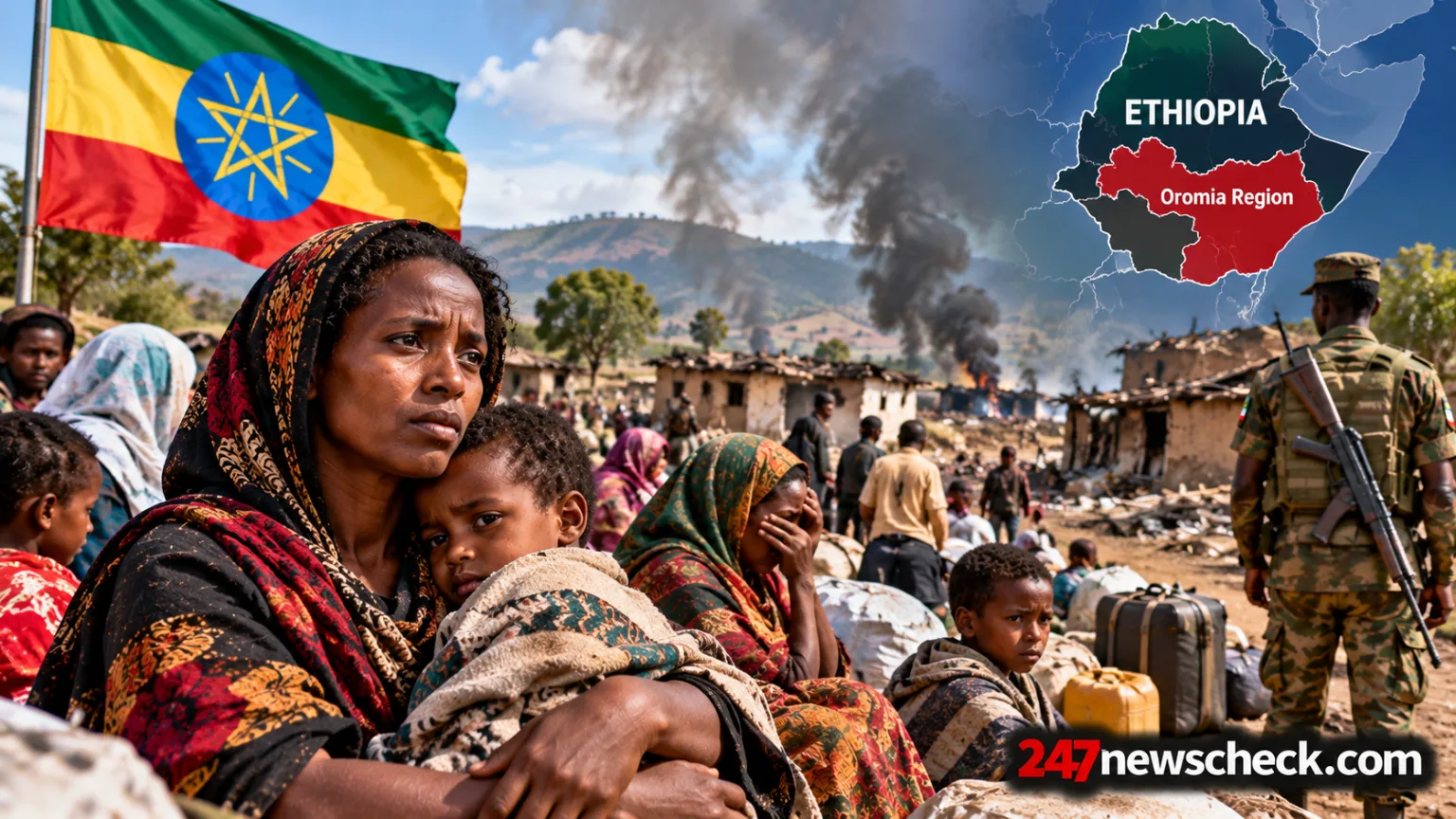
Renewed violence in Ethiopia is intensifying concerns about civilian safety, displacement and the wider implications of prolonged insecurity across the Horn of Africa, following reports of deadly attacks in the Oromia Region and fresh fighting near the country’s border with Kenya.
The Ethiopian Orthodox Tewahedo Church reported on October 26 that at least 60 people were killed in two attacks in the Arsi Zone of Oromia on October 20 and 24. The reported victims were Orthodox Christians, while more than 20 people were said to have suffered serious injuries and about 20 homes were burned.
The attacks have drawn attention to the challenges facing communities in areas affected by armed conflict, where civilians remain vulnerable to killings, property destruction and further displacement.
The incidents also come amid reports that hundreds of Ethiopians, including women and children, crossed into Kenya after fighting near the border town of Moyale in late October. The separate developments illustrate how insecurity in Ethiopia can have consequences beyond individual communities and create additional humanitarian pressures in neighbouring areas.
Deadly attacks raise alarm over civilian safety
According to the church’s account, 14 people were killed in Merti district on October 20, while another 46 were killed in Shirka district on October 24. Both districts are in the Arsi Zone of Oromia.
The church condemned the killings and called on federal and regional authorities to strengthen protection for civilians, investigate the attacks and ensure that those responsible are brought to justice.
The reported death toll has been carried by international news organisations, but details about the perpetrators and their motives remain disputed.
Oromia regional authorities blamed an armed opposition alliance, alleging that the violence was intended to inflame ethnic and religious tensions. A source linked to the alliance, however, accused regional authorities of responsibility. Neither accusation has been independently established, and the competing claims underscore the need for an impartial investigation.
Until credible findings are available, responsibility for the attacks should not be attributed conclusively to any party.
A prolonged security crisis in Oromia
Oromia, Ethiopia’s largest regional state, has experienced years of insecurity involving government forces and armed groups, including the Oromo Liberation Army. Other armed actors and criminal networks have also contributed to the risks faced by civilians in parts of the region.
The conflict has been associated with civilian deaths, abductions, displacement and damage to homes and livelihoods. Restricted access, insecurity and difficulties facing independent reporting can make it challenging to establish the full scale of abuses and verify individual incidents.
The latest attacks have renewed questions about the ability of security institutions to protect vulnerable communities and prevent violence from recurring.
Protecting civilians requires more than responding after an attack. Authorities must also assess threats, improve early-warning arrangements, investigate credible reports of impending violence and ensure that security operations comply with applicable law.
Border fighting adds to humanitarian concerns
Separately, fighting near Moyale, a town that straddles the Ethiopia-Kenya border, prompted hundreds of Ethiopians to cross into Kenya, according to reporting by Reuters citing Kenyan officials and the Kenya Red Cross.
The arrivals included women and children, while humanitarian personnel were assessing the number of people affected and their immediate needs.
Cross-border displacement can place pressure on host communities and local services, particularly when people arrive suddenly and without adequate shelter, food, healthcare or other essential support. It can also complicate efforts to locate separated family members and ensure the safety of vulnerable people.
The cause of the fighting near Moyale remained unclear in the reports available at the time. It should not be assumed that the border incident and the attacks in Arsi were connected simply because both occurred amid Ethiopia’s broader security challenges.
Nevertheless, the developments highlight the importance of monitoring local conflicts for their potential humanitarian and regional consequences.
Implications for regional stability
Ethiopia occupies a strategically important position in the Horn of Africa and shares borders with several countries, including Kenya, Somalia, Eritrea, Djibouti, Sudan and South Sudan. Persistent insecurity can complicate cross-border trade, disrupt livelihoods and increase the demands placed on neighbouring governments and humanitarian organisations.
Displacement into Kenya illustrates one way local violence can quickly become a concern for neighbouring communities. Continued instability may also hinder economic activity and make it more difficult for families to return safely to their homes.
These risks do not mean that wider regional destabilisation is inevitable. They do, however, underline the importance of preventing local violence from escalating and ensuring that civilians can access protection and assistance.
Regional cooperation, reliable communication between authorities and humanitarian organisations, and respect for the rights of displaced people can help limit the wider effects of insecurity.
Calls for accountability and humanitarian access
The immediate priorities are to protect communities at risk, provide medical assistance to injured people, support families affected by the attacks and establish the facts through credible investigations.
Investigators should examine evidence impartially, preserve witness accounts where it is safe to do so and avoid conclusions based solely on statements by parties involved in the conflict.
Humanitarian organisations also need safe and practical access to affected communities so they can assess needs and provide assistance without discrimination. Displaced people should be treated with dignity and should not be returned to areas where their safety cannot be reasonably assured.
The protection of civilians is a responsibility that applies regardless of religion, ethnicity, political affiliation or perceived association with an armed group.
What to watch next
Further developments will depend on the findings of investigations into the Oromia attacks, the security situation around Moyale and the ability of authorities and humanitarian agencies to respond to the needs of affected communities.
Independent verification of casualty figures, transparent accountability measures and reliable information about displacement will be essential to understanding the scale of the crisis.
For now, the reported killings and cross-border flight serve as a reminder that civilians often bear the greatest cost of prolonged insecurity. Efforts to restore stability must therefore place civilian protection, accountability and humanitarian assistance at the centre of the response.
247NewsCheck.com will continue to monitor developments in Ethiopia, including investigations into the Oromia attacks, humanitarian conditions and any verified implications for neighbouring countries.