For many Nigerians, a slow internet connection is more than a technical inconvenience. It can mean a failed online payment, a delayed business transaction, an interrupted virtual meeting or a student struggling to access learning materials.
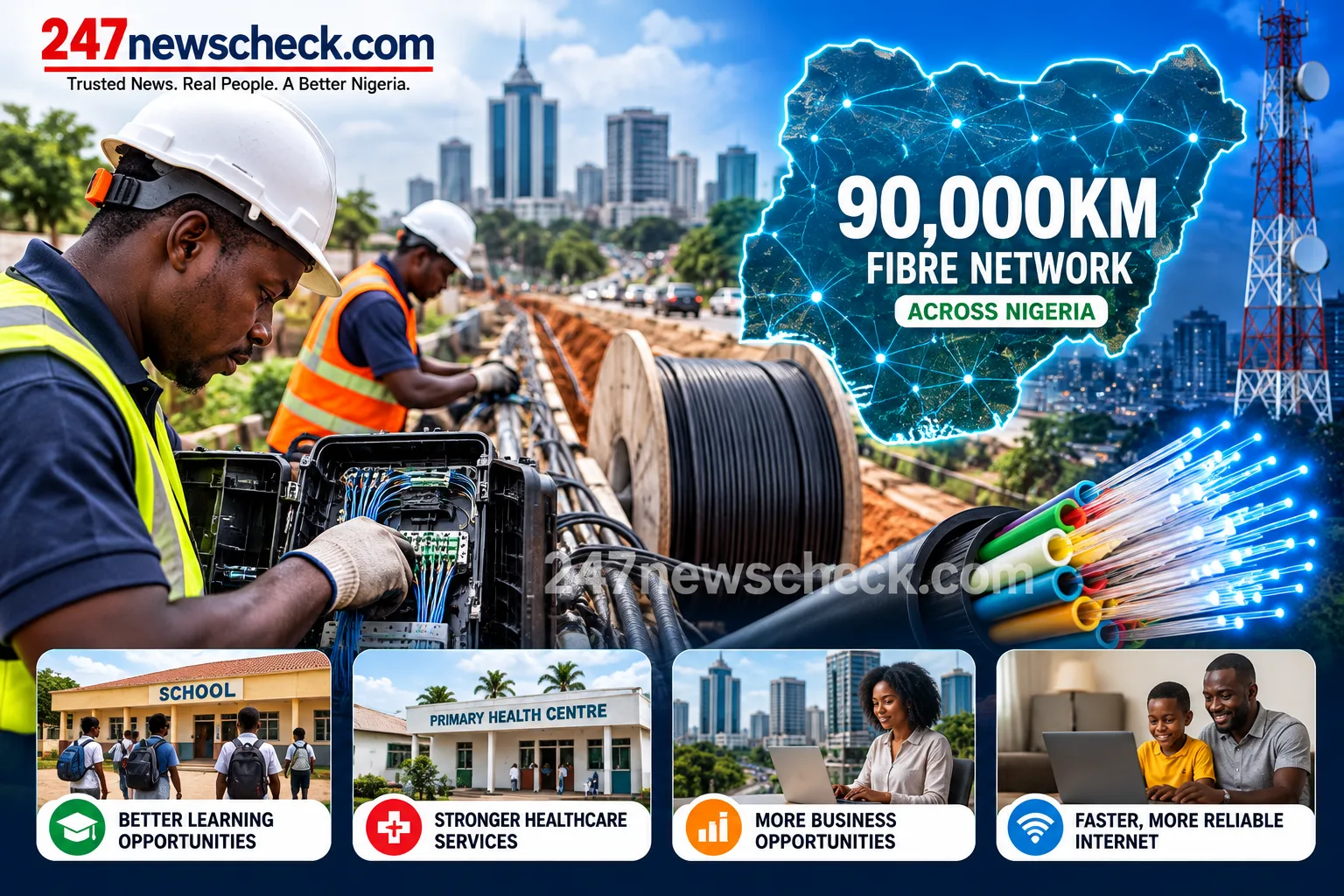
The Federal Government is now pushing a major digital infrastructure project that could help address some of these challenges. Under Project BRIDGE, Nigeria plans to deploy more than 90,000 kilometers of open-access fiber-optic infrastructure across the country, with completion targeted for 2028.
The latest update, announced by All Progressives Congress National Chairman Nentawe Yilwatda on October 8, places the project at the center of Nigeria’s ambition to expand broadband access and strengthen its digital economy.
When completed, the new infrastructure is expected to increase the country’s combined fiber backbone from approximately 35,000 kilometers to about 125,000 kilometers. The project is also expected to support connectivity for more than 200,000 schools, healthcare facilities and other public institutions.
For Nigerians who depend on internet access to learn, work, trade and communicate, the important question is not simply how many kilometers of cable the government plans to install. It is whether the investment will translate into faster, more reliable and more affordable internet in everyday life.
What Is Project BRIDGE?
Project BRIDGE stands for Building Resilient Digital Infrastructure for Growth. It is a Federal Government initiative designed to expand Nigeria’s national fiber-optic backbone and make it easier for telecommunications operators and internet service providers to deliver connectivity across the country.
Fiber-optic cables carry large amounts of data using pulses of light. They are widely used in telecommunications networks because they can support high-capacity data transmission over long distances.
The planned network is intended to strengthen the underlying infrastructure that allows internet traffic to move between cities, businesses, public institutions and local networks.
The project is structured around an open-access model. Rather than operating primarily as a retail internet provider selling subscriptions directly to individual households, the network is intended to provide infrastructure that qualified telecommunications companies and internet service providers can use.
This approach could help operators expand their services without each company having to build an entirely separate long-distance fibre network.
The initiative forms part of the government’s wider digital transformation agenda, which seeks to improve connectivity, encourage investment and support technology-driven economic activity.
Why Nigeria Needs More Fiber-Optic Infrastructure
Nigeria’s growing dependence on digital services has increased the importance of reliable internet connectivity.
Banks rely on communications networks to process transactions. Businesses use online platforms to reach customers and manage operations. Schools and universities increasingly depend on digital resources, while hospitals need dependable systems for communication, information management and other services.
Yet access to reliable broadband remains uneven. Major commercial centers generally have more developed telecommunications infrastructure than many smaller towns and rural communities.
This difference can affect the opportunities available to people based on where they live.
A small business in a well-connected city may be able to operate an online store, receive digital payments and market its products nationally. A similar business in an underserved community may struggle with unstable connectivity, higher operating costs or limited access to service providers.
Expanding the national fiber backbone could help reduce some of these infrastructure gaps by giving operators more capacity to extend their networks.
However, fiber deployment alone will not solve every connectivity problem. Mobile towers, electricity, equipment, local distribution networks and the cost of data subscriptions will also influence the quality of service consumers receive.
How the Project Could Benefit Small Businesses
For small businesses, internet quality can directly affect sales, customer service and daily operating costs.
Consider a fashion seller who receives orders through social media, a food vendor who depends on online delivery platforms or a trader who uses digital banking to pay suppliers. When connectivity is unreliable, these businesses may lose customers, delay transactions or spend additional time trying to complete simple tasks.
A stronger fiber backbone could give internet service providers more capacity to serve commercial areas and extend connections into locations that currently have limited options.
If this leads to better service and greater competition, small businesses could find it easier to manage online payments, communicate with customers, advertise their products and participate in e-commerce.
The benefits could extend to businesses outside major cities. Improved infrastructure may make it more practical for entrepreneurs in smaller communities to serve customers in other states without relocating their operations.
For the wider economy, better connectivity can support digital services, remote work and new business models. But these gains will depend on providers actually extending services and offering prices that ordinary businesses can afford.
What It Could Mean for Students and Schools
Students are another group that could benefit from improved broadband infrastructure.
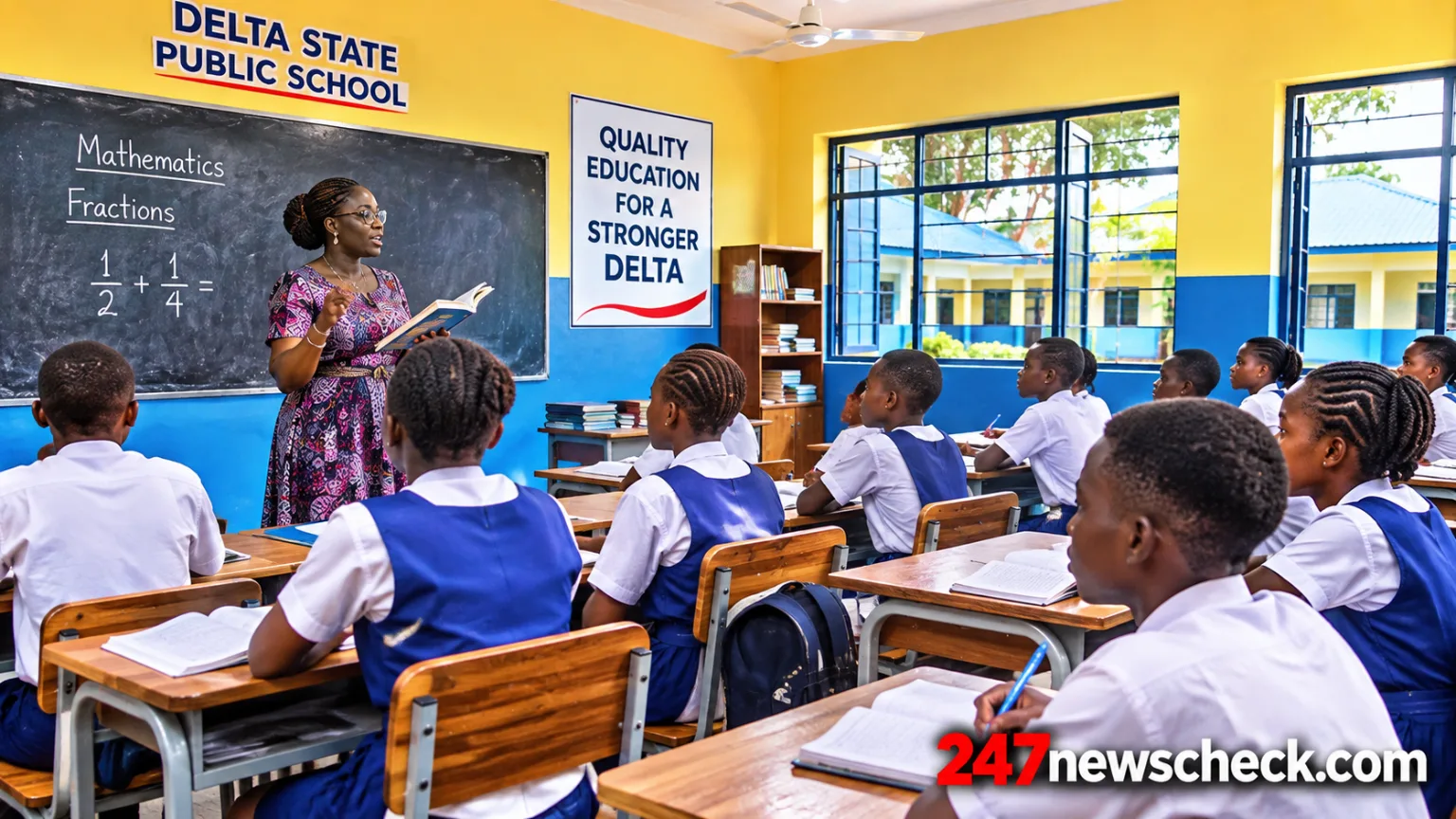
Access to reliable internet can help learners use digital libraries, participate in online classes, research assignments and develop skills needed in a technology-driven economy.
Teachers and educational institutions can also benefit from access to digital training materials, administrative platforms and communication tools.
The government expects Project BRIDGE to support connectivity for more than 200,000 schools, healthcare facilities and other public institutions. The combined target is significant, but the exact benefits for individual schools will depend on implementation and the availability of suitable connections and equipment.
A fiber cable passing near a school does not automatically mean that students can access the internet. Institutions may still need local network equipment, computers or other devices, electricity, trained personnel and funding for ongoing service.
For rural schools, those practical requirements could determine whether improved infrastructure becomes a useful learning resource or simply a cable passing through the area.
Could Hospitals and Healthcare Facilities Benefit?
Reliable internet can support communication between healthcare workers, improve access to digital records and make it easier for facilities to use certain online medical services.
In well-equipped facilities, connectivity may support remote consultations, the transfer of medical information and access to professional guidance. It can also improve administrative communication and the coordination of services.
For hospitals and clinics in underserved communities, a dependable broadband connection could help reduce some of the barriers associated with distance and limited access to information.
However, connectivity is only one part of healthcare delivery. Medical staff, equipment, electricity, patient privacy protections and adequate funding remain essential.
Project BRIDGE could provide part of the infrastructure needed for more connected healthcare services, but it should not be presented as a stand-alone solution to Nigeria’s healthcare challenges.
Will the Fiber Network Make Internet Data Cheaper?
This is likely to be one of the most important questions for ordinary Nigerians.
A larger fiber backbone could lower some infrastructure barriers for telecommunications operators and internet service providers. If operators can access network capacity more efficiently, they may find it easier to expand services and manage certain costs.
The open-access structure is also intended to allow multiple qualified operators to use the infrastructure on fair terms. Greater access to shared infrastructure could support competition and wider service availability.
However, cheaper data is not guaranteed simply because more fiber is installed.
The price consumers pay can be affected by several factors, including network operating costs, electricity, equipment, taxes, spectrum and licensing expenses, foreign-exchange pressures and competition among service providers.
For users, the real test will be whether improved infrastructure results in better packages, more reliable service and wider coverage at prices households and businesses can afford.
The government and participating operators will need to show how the project’s benefits will reach consumers rather than remain limited to the backbone network.
Funding the Project: The Investment Behind the Cables
Project BRIDGE has an estimated overall cost of about $2 billion and is being developed through a public-private partnership structure.
The Federal Government has reported approximately $800 million in sovereign financing commitments from development finance institutions. These include $500 million from the World Bank, $100 million from the European Bank for Reconstruction and Development and $200 million from the African Development Bank.
The European Union has also announced a €22 million grant connected with the initiative.
The remaining funding requirement is expected to involve private-sector investment. The project’s financing structure is intended to combine government participation with private capital and operational expertise.
This approach is important because a national fiber rollout requires substantial spending on cable installation, civil works, equipment, maintenance and network operations.
Attracting the remaining investment and ensuring that funds are used effectively will be central to the project’s delivery.
Public reporting on financing, construction milestones and spending will also matter. Nigerians should be able to assess how much infrastructure has been completed, which areas are being served and whether the project is progressing towards its stated targets.
Why the 2028 Deadline Matters
The government has set 2028 as the target for delivering the planned 90,000-kilometre network.
That deadline creates a clear measure against which implementation can be assessed. But a target is not the same as completed infrastructure, and the benefits will not necessarily arrive everywhere at once.
The rollout will involve construction planning, access to land and rights of way, coordination with state and local authorities, procurement, installation and technical testing.
Delays can arise when fiber routes conflict with road construction, permits take time to secure or infrastructure is damaged during excavation. Vandalism and the cost of maintaining equipment can also affect the reliability of the network.
A successful rollout will therefore require coordination between government agencies, private investors, telecommunications operators, construction companies and state governments.
Regular progress updates would help the public understand whether the project is meeting its schedule and which communities are expected to benefit at different stages.
The Challenges That Could Limit Its Impact
Despite its potential, the project faces practical challenges that need to be addressed if it is to deliver meaningful results.
Electricity supply: Internet infrastructure and connected devices need dependable power. Businesses and households may still struggle to benefit from improved connectivity if electricity remains unreliable or expensive.
Last-mile connections: The national backbone must connect to local networks, mobile towers, businesses, public institutions and homes. Without these links, communities may remain underserved even when long-distance fiber infrastructure is available.
Affordability: Service providers must offer packages that ordinary Nigerians can afford. Better technical capacity does not automatically translate into lower subscription costs.
Protection of infrastructure: Fiber cables can be damaged by road construction, excavation and vandalism. Better coordination among contractors, utilities and telecommunications operators will be necessary to protect the investment.
Fair access for providers: The open-access model will need transparent rules to ensure that eligible operators can use the network on fair and predictable terms.
Accountability: The government and project operators will need to publish clear information on construction progress, financing, access arrangements and service outcomes.
Addressing these challenges will be just as important as installing the cables themselves.
What Nigerians Should Watch For
As Project BRIDGE moves into its rollout phase, several developments will help determine whether the initiative is delivering on its promises.
First, the public should look for evidence of physical construction and completed fiber routes, rather than relying only on announcements.
Second, information about the communities, schools and healthcare facilities expected to benefit should become clearer as implementation progresses.
Third, internet users should watch whether service providers expand coverage and improve the reliability of their services in areas that have traditionally had fewer options.
Fourth, businesses and consumers should assess whether better infrastructure leads to meaningful improvements in price, speed and service quality.
Finally, regular reporting on financing, construction milestones and network access will help the public distinguish between the project’s targets and its actual achievements.
The Bigger Picture: Building a More Connected Nigeria
The proposed 90,000-kilometre fiber network represents a major investment in the infrastructure that supports a modern digital economy.
If successfully delivered and connected to local services, it could create opportunities for small businesses, support digital education, strengthen healthcare communication and help internet providers extend their reach beyond established commercial centers.
But the ultimate measure of success will not be the length of cable installed. It will be whether more Nigerians can use the internet reliably, whether businesses can operate more efficiently and whether schools and public institutions receive practical benefits from the investment.
For a student trying to access online learning, a trader processing payments or an entrepreneur building a digital business, better connectivity is valuable only when it works and remains affordable.
Project BRIDGE now faces the task of turning a national infrastructure target into improvements that people can see and experience.
247NewsCheck will continue to follow the rollout, its funding and its potential impact on Nigeria’s technology sector, businesses and everyday internet users.