
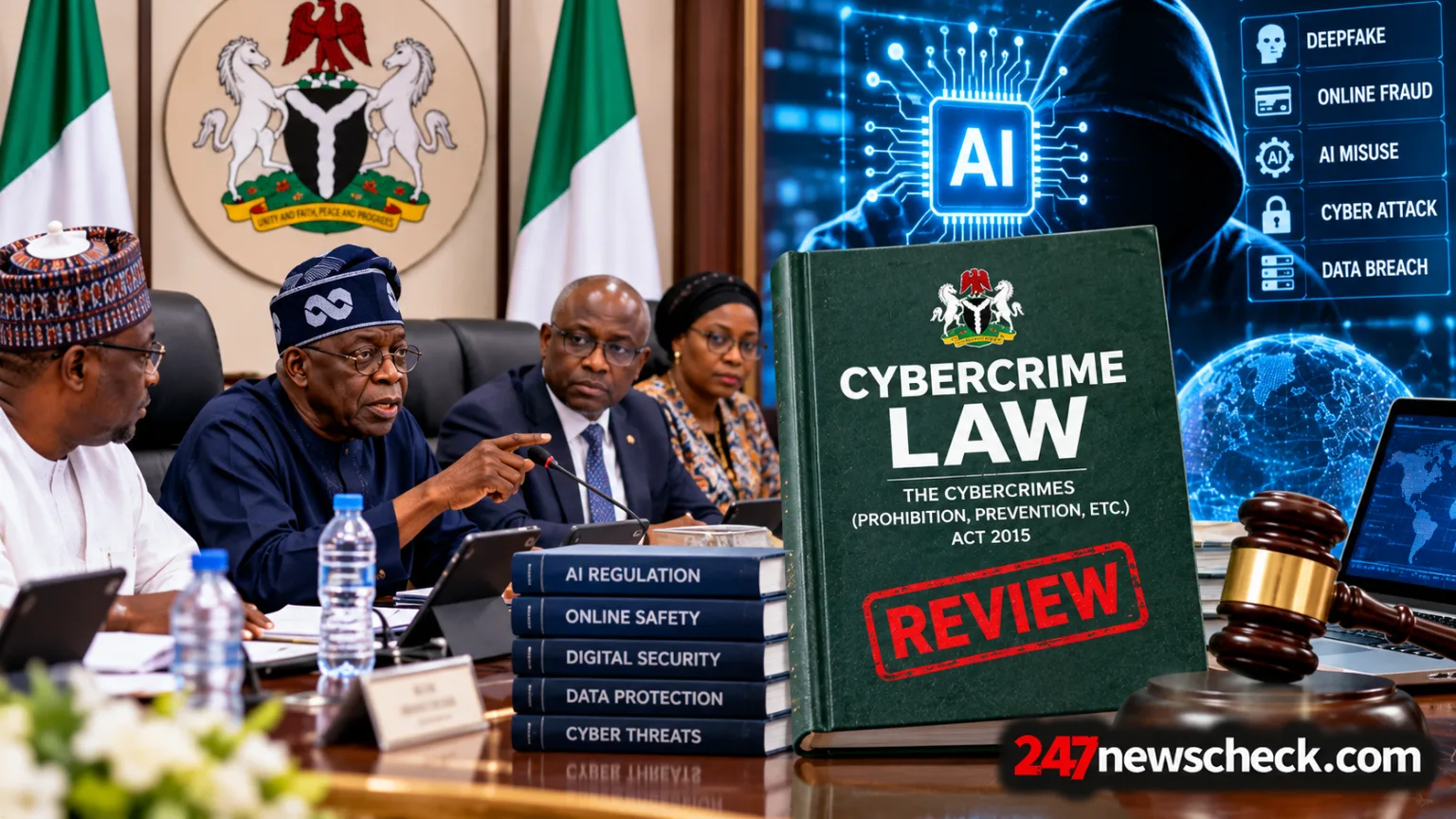
The Federal Government has advanced plans to review Nigeria’s cybercrime legislation as artificial intelligence creates new challenges for law enforcement, businesses and citizens, including increasingly sophisticated online fraud, digital impersonation and attacks on critical infrastructure.
The Attorney-General of the Federation and Minister of Justice, Lateef Fagbemi, disclosed the development in a message delivered on his behalf by the Director of Public Prosecutions of the Federation, Rotimi Oyedepo, at the second International Cybersecurity Conference in Abuja on Tuesday, October 27, 2026.
Fagbemi said the Federal Ministry of Justice had advanced work on a draft executive bill intended to strengthen the country’s legal framework for investigating and prosecuting cybercrime.
The proposed review is expected to address emerging technological developments, improve the preservation and exchange of electronic evidence, and strengthen cooperation among law enforcement agencies.
The announcement comes amid growing concerns about the use of AI-generated voices, manipulated videos, synthetic images and automated tools to deceive victims and undermine trust in digital information.
Government Targets Emerging AI-Enabled Crimes
According to the Attorney-General, cybercrime has expanded beyond conventional internet fraud to include cryptocurrency-related offences, sextortion, child exploitation and AI-assisted deception.
These activities can expose individuals and organisations to financial losses, identity theft, reputational harm and the unauthorised disclosure of sensitive information.
Artificial intelligence can make some forms of deception more convincing by enabling criminals to imitate voices, create fabricated images and videos, or produce personalised messages designed to persuade victims to disclose passwords, transfer money or reveal confidential information.
Businesses, financial institutions, telecommunications operators and government agencies also face risks from cyberattacks that can disrupt essential services and compromise sensitive data.
The government’s proposed legislative response is intended to strengthen the ability of relevant authorities to investigate emerging offences and pursue prosecutions where sufficient evidence exists.
However, the development remains at the proposal stage. The announcement of a draft executive bill does not mean that a revised Cybercrimes Act has already been enacted.
NITDA, Security Agencies and Lawmakers to Collaborate
The Director-General of the National Information Technology Development Agency, Kashifu Inuwa Abdullahi, said NITDA was working with the Office of the National Security Adviser and the National Assembly on efforts to review the existing Cybercrimes Act.
He also highlighted the need for a national cybersecurity architecture that would establish minimum protection standards for organisations.
Such an approach could help improve coordination across public institutions and private-sector organisations, many of which depend on interconnected digital systems to deliver services.
The agency has also emphasised the importance of digital sovereignty, including stronger oversight of data, cloud infrastructure and emerging technologies.
In practical terms, a more coordinated national framework could support information-sharing, incident response and the adoption of common security standards across critical sectors.
The effectiveness of these measures will depend on clear responsibilities, adequate technical capacity, sustained funding and cooperation among the institutions responsible for implementation.
NCC Warns of Risks to Essential Services
The Executive Vice-Chairman of the Nigerian Communications Commission, Aminu Maida, also warned that AI-powered cyberattacks could threaten telecommunications networks, financial services and government operations.
Maida, who was represented at the conference by the commission’s Executive Commissioner for Technical Services, Sunday Oshadami, said cybercriminals were increasingly deploying automated attacks, deepfakes and sophisticated malware.
Telecommunications infrastructure is particularly important because disruptions can affect communications, digital payments, emergency response and other services on which individuals and businesses depend.
The NCC said it had established a Computer Security Incident Response Team and introduced a cyber resilience framework setting security expectations for licensed telecommunications operators.
The commission has also encouraged operators to adopt zero-trust security systems and continuously test their digital infrastructure for vulnerabilities.
Such measures are designed to reduce the likelihood of successful attacks and improve the ability of organisations to recover when security incidents occur.
Protecting Citizens Without Undermining Fundamental Rights
While calling for a stronger legal response, Fagbemi stressed that cybersecurity enforcement must respect fundamental rights and the rule of law.
The proposed reforms raise important questions about how investigators can obtain and preserve digital evidence, cooperate across jurisdictions and pursue cybercriminals without creating unnecessary restrictions on lawful expression, privacy or legitimate online activity.
This balance is especially important in Nigeria, where provisions of cybercrime legislation have previously generated public debate about their application to online speech and alleged cyberstalking.
Any new legislative provisions will therefore need to be clear, proportionate and consistent with constitutional protections.
The government’s stated objective is to strengthen the ability to investigate and prosecute genuine cyber offences while ensuring that security powers are not used to undermine fundamental freedoms.
The final wording of the proposed bill and the safeguards it contains will be important indicators of how that balance is addressed.
What Happens Next?
The next stages will depend on the completion of the draft executive bill and the applicable process for its consideration by the relevant government institutions and the National Assembly.
Until the required legislative steps are completed, the existing law remains the operative framework. The proposed reforms should not be treated as new offences or enforcement powers that are already in force.
Lawmakers and other stakeholders will have an important role in examining the proposed provisions, considering their practical implications and ensuring that any changes are workable and consistent with constitutional protections.
For individuals and businesses, the discussions also reinforce the importance of basic cybersecurity practices, including verifying unusual payment requests, protecting account credentials, enabling multifactor authentication and checking the authenticity of suspicious audio or video messages before acting on them.
Organisations should also maintain incident-response plans, secure sensitive information and ensure that staff receive appropriate cybersecurity training.
Nigeria’s ability to respond to AI-enabled cybercrime will depend not only on legislation but also on technical readiness, public awareness, effective investigations and cooperation between government and industry.
247NewsCheck.com will continue to monitor Nigeria’s proposed cybercrime law reforms, including the draft bill, stakeholder consultations and any legislative developments, as further verified information becomes available.