
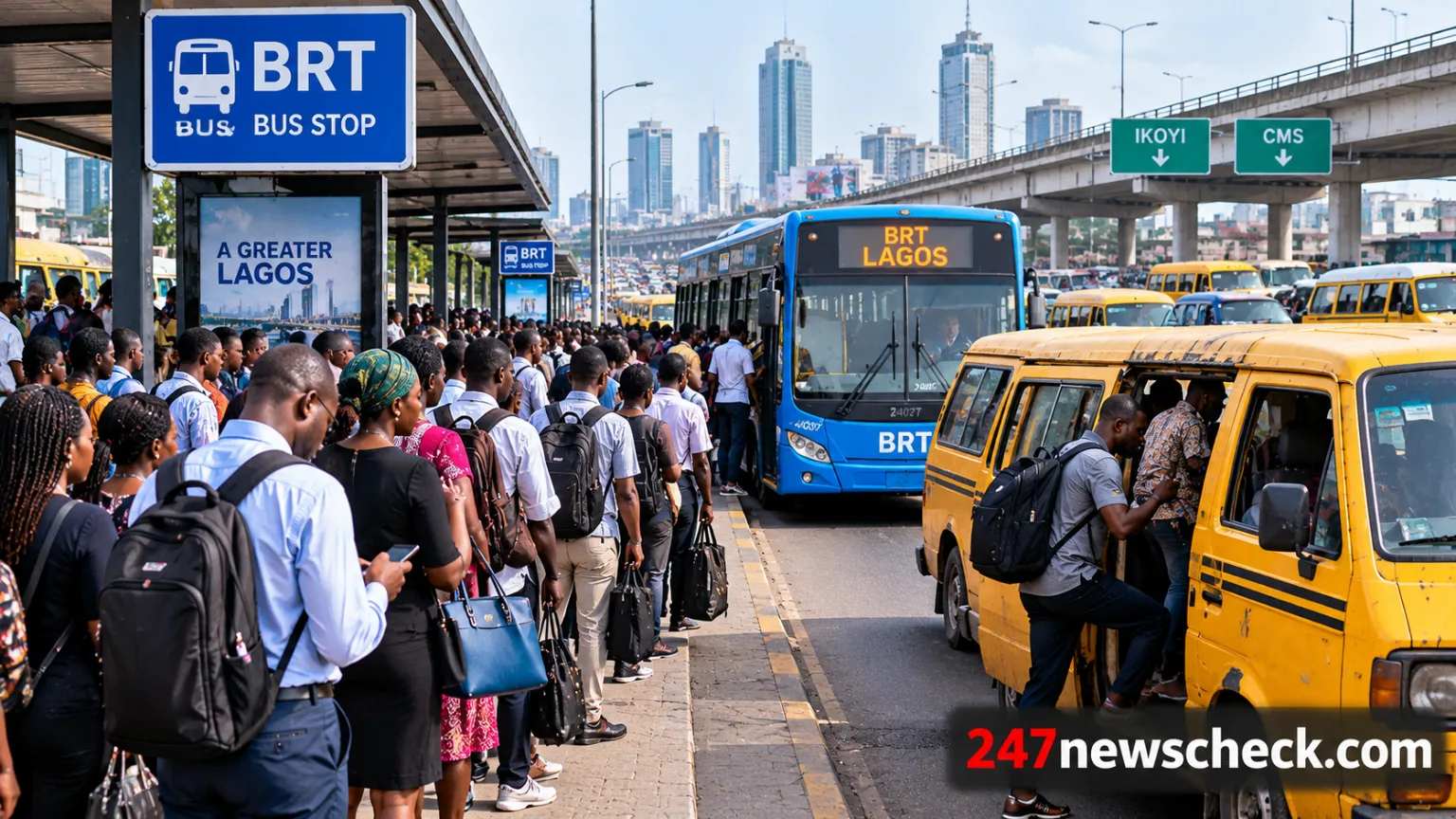
For many residents of Lagos, the cost of travelling across the city extends beyond the fare printed on a ticket or agreed with a driver. When buses take too long to depart, commuters may have to choose between waiting, risking lateness, or spending more to find another route.
The problem highlights a difficult balance between affordability and reliability in a city where workers, traders, students and business owners depend heavily on public transport for their daily activities.
A report published by The Guardian Nigeria on October 22 documented commuter experiences around Ojota, Magodo, Ketu and routes connecting parts of Lagos, including Ogba, Agege and Lagos Island. The accounts described lengthy waits, changes in boarding arrangements and journeys disrupted by vehicle problems.
Although individual experiences differ by route and time of day, the reported cases illustrate how an unreliable departure can create additional expenses for passengers who cannot afford to arrive late.
When the cheaper journey becomes more expensive
One of the challenges highlighted in the Guardian report was the uncertainty surrounding departures from the Ojota motor park.
Favour Okon, whose journeys involve the Ogba and Agege areas, reportedly waited for more than an hour for a bus to fill before departing. On another occasion, a vehicle developed a mechanical problem shortly after leaving the park, leaving passengers to seek alternative transport.
The report said passengers had already paid for the interrupted journey and were not refunded, increasing the financial impact of the disruption.
Such situations can leave commuters paying twice: first for a journey that does not proceed as expected and again for another vehicle to complete the trip. However, the available account does not establish that this happens to every passenger or on every route.
The same report described the experience of lawyer Farouk Olaide, who said he had waited for almost two hours at Ojota while travelling towards Ogba or Agege, despite needing to attend court.
According to the report, Olaide paid about ₦600 for a bus journey. An alternative involving a tricycle and a connecting bus cost approximately ₦800 in total — about ₦200 more.
That difference may appear modest in isolation,but repeated across a working week or an entire month, additional transport spending can place pressure on a commuter’s budget. The figures are reported examples, not a current, independently verified fare survey, and actual prices may vary.
The hidden cost of waiting
Time lost at a bus stop can affect more than a passenger’s arrival time. Workers may miss scheduled duties, students may arrive late for classes, and people with appointments may have to pay for faster alternatives to reduce the risk of missing them.
Commuters also need to account for journeys involving multiple vehicles. A route that appears cheaper at the first boarding point may become more expensive when a delay forces a passenger to change transport, pay another fare or take a longer route.
These costs are difficult to measure using fares alone. Waiting time, transfers, unexpected breakdowns and the possibility of arriving late all influence the real cost of getting to a destination.
A separate report published by BusinessDay on July 27, 2026, described long queues and bus-capacity challenges in Lagos’ Bus Rapid Transit system. It reported that some passengers experienced extended waits while trying to board BRT services.
The report also cited the Lagos Metropolitan Area Transport Authority (LAMATA) on constraints affecting bus availability, including an ageing fleet, maintenance requirements, high procurement costs and traffic-related operational challenges.
The experiences involving conventional commercial buses and those involving BRT services are not identical. Nevertheless, both reports point to the importance of adequate capacity and dependable service for passengers who rely on public transport.
Why drivers may delay departures
Long waits can frustrate passengers, but the reasons for delays may differ between operators and routes.
Drivers interviewed in the Guardian report said they sometimes waited for more passengers before departing because operating costs and park-related payments made leaving with empty seats financially difficult.
This helps explain the tension between passenger needs and the economics of commercial transport. A commuter may need a vehicle to leave immediately, while a driver may consider a trip unprofitable without enough passengers.
However, the explanation does not remove the need for transparent boarding arrangements, clear communication and fair treatment when a journey is disrupted. Passengers need to know when a vehicle is expected to depart and what options are available if a breakdown or other problem interrupts the trip.
Transport costs and household budgets
For households already managing food, housing, education and other daily expenses, unpredictable transport spending can make budgeting more difficult.
A commuter who plans around a fixed daily fare may have little room for an unexpected transfer or a more expensive alternative. The impact can be especially significant for people who make several journeys a day or travel long distances to work.
The Federal Government’s transport-affordability initiative has also placed attention on whether lower operating costs and the deployment of compressed natural gas (CNG) buses can translate into meaningful relief for passengers.
In an October 7 report, *The Guardian Nigeria* found that fares on several monitored Lagos routes had not shown the expected reduction by that date. The report also noted that some passengers were unsure where to access the new CNG-powered services.
The existence of additional buses or lower-cost fuel does not automatically guarantee cheaper or more reliable journeys. The benefit passengers experience depends on where vehicles operate, how frequently they run, how accessible the services are and whether any savings are reflected in fares.
What could improve the commuter experience?
Improving daily travel requires more than asking passengers to leave home earlier or encouraging them to pay more for alternative transport.
Transport authorities and operators could consider several practical measures:
More capacity on busy routes: Allocate available buses according to passenger demand, particularly during morning and evening peak periods.
More predictable departures: Improve scheduling and provide clear information about expected departure times, reducing uncertainty at busy terminals.
Better vehicle maintenance: Reduce avoidable breakdowns and establish clear procedures for assisting passengers when a vehicle cannot complete a journey.
Transparent boarding and fares: Make boarding arrangements and applicable fares clear, with accessible channels for complaints about unfair treatment or disrupted journeys.
Clear information on subsidised services: Publish routes, operating hours and fares for government-backed transport initiatives so commuters can identify and use available services.
Regular monitoring: Track waiting times, service frequency and passenger complaints to identify routes where delays are persistent.
These measures would need to be assessed against actual route conditions, available funding and operational constraints. Their effectiveness should be measured by whether passengers experience shorter waits, more reliable departures and manageable transport costs.
The need for evidence from more routes
The accounts published by other news organisations provide useful starting points, but they do not establish the scale of the problem across the whole of Lagos.
A fuller assessment would require fresh checks on multiple routes, including recording fares at different times of day, measuring waiting periods, documenting transfer costs and seeking responses from transport authorities and operators.
It would also be important to compare peak and off-peak journeys and to distinguish between conventional commercial buses, tricycles and regulated BRT services.
For now, the reported experiences show why the cheapest advertised fare does not always represent the least costly journey. When passengers cannot predict when a vehicle will depart, they may pay extra to protect their time — an additional burden for people who depend on public transport every day.
For Lagos commuters, a more affordable transport system must therefore be judged not only by the price of a single trip, but also by how reliably passengers can complete their journeys without unnecessary waiting, transfers or unexpected expenses.
This report is published by 247NewsCheck — Trusted News. 24/7.
Source Attribution
1.The Guardian Nigeria, 22 October 2026 — “Lagos commuters pay more to escape long bus queues, delays.”
2. The Guardian Nigeria, 7 October 2026 — “Commuters await cheaper fares as Tinubu’s October 1 transport promise stalls.”
3. BusinessDay, 27 July 2026 — “Inside Lagos BRT capacity crunch as commuter demand outpaces supply.”