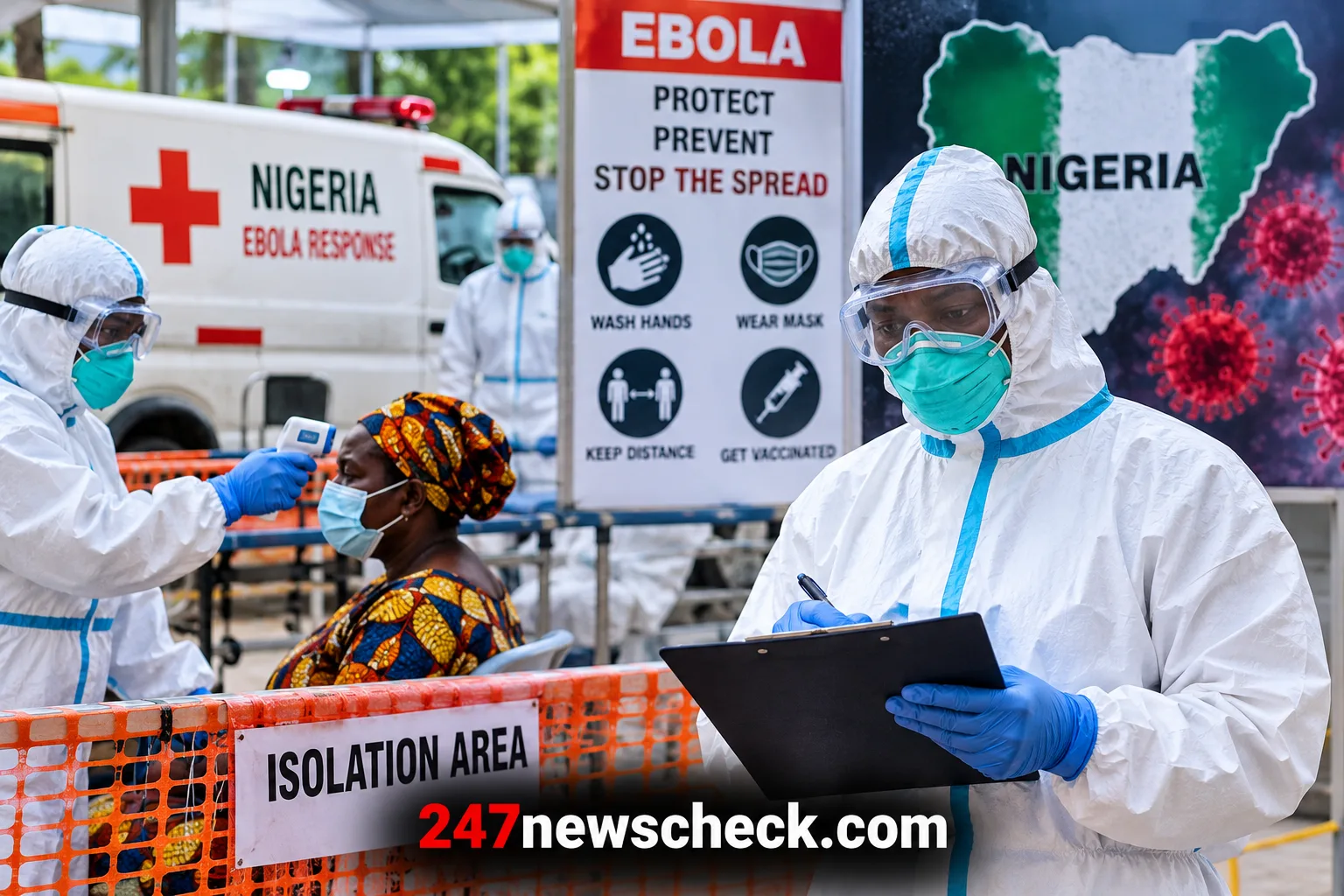
Nigeria’s latest Ebola case has raised questions about the speed of disease detection and the challenges facing health authorities as they work to identify people who may have been exposed to the virus.
The case, confirmed in Abuja on October 20, 2026, is Nigeria’s first confirmed Ebola infection in more than a decade. The patient, a woman who had recently travelled internationally, was reportedly unwell for several days and received medical attention before laboratory testing confirmed the infection.
A Reuters report published on October 22 said the patient was not tested for Ebola until October 19, approximately 13 days after symptoms reportedly began on October 6. The delay has raised concerns about the difficulties of identifying an uncommon but potentially severe infection when its early symptoms may resemble more familiar illnesses.
Nigeria’s health authorities have said the patient was isolated and receiving medical care. Health Minister Muhammad Ali Pate also said that 44 contacts had been identified as contact-tracing efforts continued.
Delayed diagnosis highlights early-detection challenges
The reported delay between the onset of symptoms and confirmation of Ebola has placed renewed attention on the importance of considering a patient’s travel history, possible exposure and clinical presentation when assessing unusual or persistent illness.
Ebola can initially present with symptoms such as fever, fatigue, headache and muscle pain. These symptoms can overlap with those of other infections, making clinical assessment and timely laboratory testing particularly important when a patient may have been exposed to the virus.
The Abuja case illustrates the need for healthcare workers to remain alert to epidemiological risks, especially when patients have recently travelled from areas affected by an outbreak.
However, the reported delay does not by itself establish that every healthcare facility involved failed to follow the appropriate procedures. Determining whether opportunities for earlier detection were missed would require a detailed review of the patient's clinical history, the assessments performed and the decisions made during treatment.
Contact tracing becomes a central priority
Contact tracing is one of the most important measures used to control Ebola outbreaks. It involves identifying people who may have had contact with an infected person, assessing their exposure and monitoring them for symptoms during the relevant observation period.
Following Nigeria’s confirmation of the case, authorities reported that 44 contacts had been identified. The number represented the contacts known at that stage, rather than necessarily the final total of everyone who might have been exposed.
A delay in confirming an infection can make this work more complicated because a patient may have visited healthcare facilities or interacted with other people before the illness is recognised. Investigators must establish the patient's movements and determine which encounters may have presented a genuine exposure risk.
The effectiveness of contact tracing depends on timely information, cooperation from affected individuals, accurate records and the ability of public health teams to follow up with identified contacts.
Health authorities have not reported evidence, in the statements reviewed for this article, that the Abuja case had spread into the wider Nigerian community as of October 22. That assessment was based on the information available at the time and should not be interpreted as a guarantee that no further cases could emerge.
Nigeria’s preparedness under renewed scrutiny
Nigeria gained significant experience responding to Ebola during the 2014 West African epidemic, when the country successfully interrupted transmission following the introduction of the virus into Lagos.
That response involved coordinated surveillance, isolation, laboratory testing, contact tracing and public communication. The experience remains an important reference point for Nigeria's current efforts to prevent further transmission.
Nevertheless, each outbreak presents its own challenges. The current outbreak involves the Bundibugyo virus, a distinct Ebola virus species, and has spread across several countries. Preparedness therefore requires current information about the virus, appropriate diagnostic capacity, infection-prevention procedures and coordination between healthcare facilities and public health agencies.
The Nigeria Centre for Disease Control and Prevention, the Federal Ministry of Health and Social Welfare, state authorities and international public health partners have important roles in coordinating surveillance, laboratory services, case management and public communication.
The latest case reinforces the need to ensure that healthcare workers can recognise possible warning signs, obtain specialist guidance when necessary and apply the relevant testing and infection-control protocols.
Regional outbreak increases the importance of vigilance
The Nigerian case has emerged amid a wider Ebola outbreak involving countries in Central and East Africa. International health agencies have warned that cross-border travel can complicate outbreak control when infected people move between locations before their condition is recognised.
Nigeria's position as a major regional travel and business hub makes effective surveillance at healthcare facilities and points of entry particularly important. However, travel history alone does not establish where an individual acquired an infection. Public health investigators must rely on verified information and epidemiological evidence to determine the likely source of exposure.
Reports about the patient's travel history have also contained differing accounts of the countries visited. The World Health Organization said on October 22 that the information it had received did not confirm that the patient had travelled to the Democratic Republic of the Congo. Authorities have continued to exchange information to clarify her movements and possible exposure.
That distinction matters because the origin of an individual case should not be presented as established until the available evidence supports the conclusion.
Public health response must combine vigilance with accurate information
The confirmation of an Ebola case can understandably cause concern, but health communication must remain factual, proportionate and consistent with guidance from public health authorities.
Members of the public should follow official updates from the Nigeria Centre for Disease Control and Prevention and seek prompt medical advice if they develop concerning symptoms after a possible exposure. Anyone who believes they may have been exposed should contact a healthcare professional or the relevant public health authority rather than attempting to diagnose the illness independently.
Healthcare workers should follow the current national protocols for assessment, referral, testing and infection prevention. People should also avoid spreading unverified claims about suspected cases or the movements of affected individuals.
The current situation does not justify assuming that Ebola has spread widely within Nigeria. At the same time, the reported delay in diagnosis demonstrates why careful surveillance, timely testing and thorough contact tracing remain essential.
What happens next?
The priority for health authorities is to establish the full exposure history, monitor identified contacts, maintain appropriate care for the patient and respond rapidly if additional suspected cases emerge.
Further information from the NCDC, the Federal Ministry of Health and Social Welfare, the World Health Organization and Africa Centres for Disease Control and Prevention will be important in assessing the effectiveness of the response and determining whether the risk to the wider population changes.
For Nigeria, the case is a reminder that preparedness depends not only on having emergency plans but also on recognising potential infections quickly and ensuring that information moves efficiently between clinicians, laboratories and public health teams.
247NewsCheck.com will continue to report verified developments on Nigeria’s Ebola response, including updates on contact tracing, official risk assessments and any further confirmed cases.