
Public Servants Begin Three-Day Warning Strike Over Fuel Price, Wage Demands
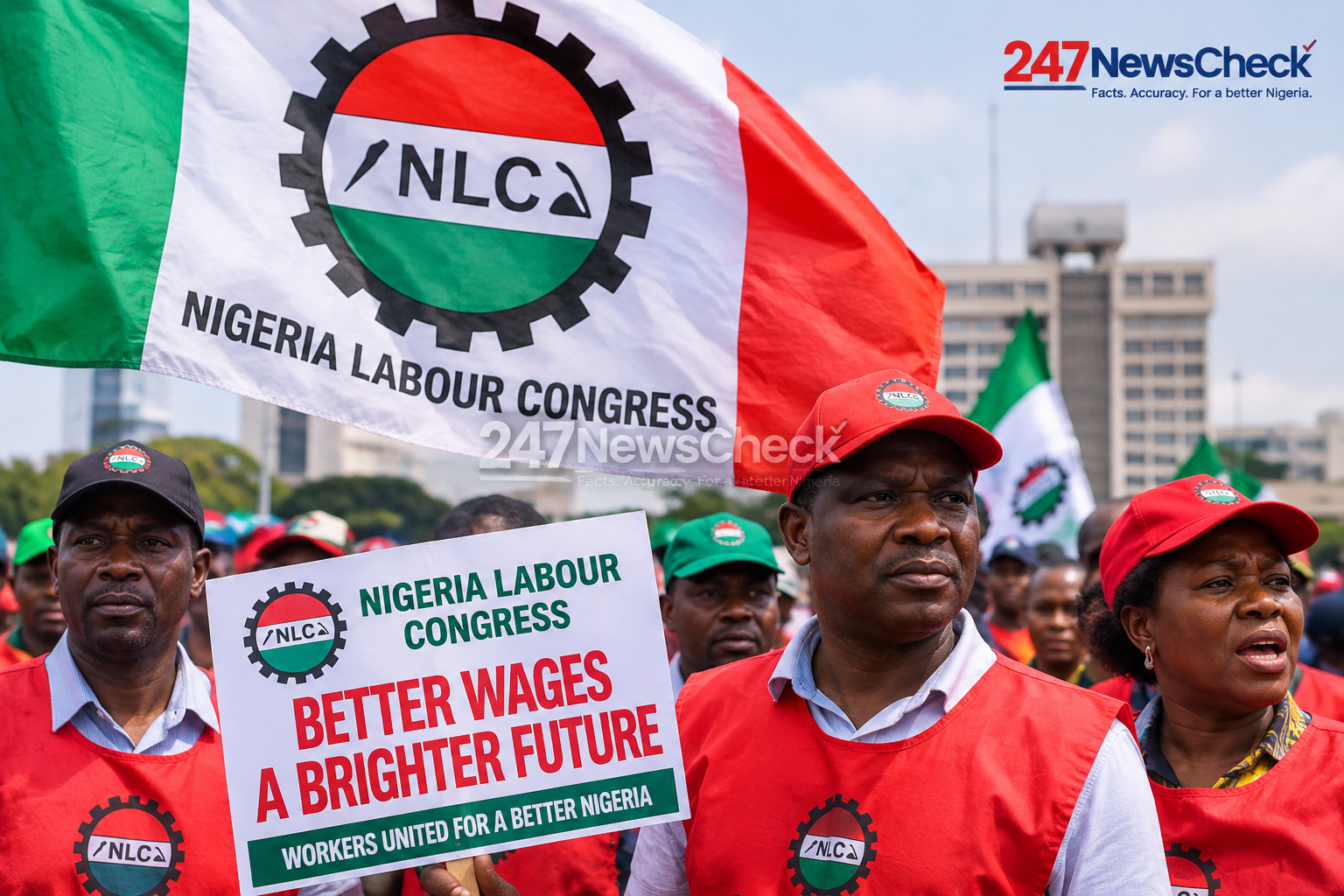
Featured image for this article.
Public sector workers across Nigeria have commenced a three-day warning strike over demands for a reduction in petrol prices, an immediate wage award and negotiations for a new national minimum wage in 2027.
Public sector workers across Nigeria have commenced a three-day warning strike following the failure of the Federal Government to address a series of demands by the Joint National Public Service Negotiating Council (JNPSNC), including a reduction in petrol prices, an immediate wage award and the commencement of negotiations for a new national minimum wage.
The industrial action began at midnight on Friday, October 2, and is scheduled to run through Sunday, October 4, 2026.
The JNPSNC directed workers across the federal, state and local government services, including employees of ministries, departments and agencies (MDAs), to comply with the strike.
The council said the action followed the expiration of its September 30 deadline for the Federal Government to respond to demands submitted to President Bola Tinubu.
Why Public Servants Are on Strike
The JNPSNC's position followed a September 21, 2026 letter addressed to President Tinubu in which the council outlined measures it said were necessary to ease the economic pressure facing workers and other Nigerians.
Among its principal demands are:
A reduction in the pump price of petrol to N500 per litre. An immediate wage award for workers to cushion the impact of rising living costs. The establishment of a tripartite committee to begin negotiations for a new national minimum wage expected to take effect in 2027. Measures to reduce the cost of petroleum products and ease the wider economic pressures affecting workers and their dependants.
The council had warned that failure to address the issues by September 30 would result in a three-day warning strike beginning October 2.
Independence Day Address Did Not Address Key Demands
The unions had specifically expected President Tinubu's October 1 Independence Day address to address their concerns over petrol prices and the wider cost-of-living situation.
The JNPSNC subsequently expressed disappointment that the address did not announce the requested reduction of petrol prices to N500 per litre or a new wage award.
The unions have cited petrol prices ranging from about N1,450 to N2,000 per litre in different locations, with reports of even higher prices in some areas, as a major source of pressure on household incomes.
The unions argue that high transportation costs linked to petrol prices have contributed to increased expenses for food, housing, education and other essential needs.
JNPSNC Directs Nationwide Compliance
The decision to proceed with the strike was formally communicated in a circular dated October 1 and signed by JNPSNC National Secretary (Trade Union side), Olowoyo Gbenga.
The directive was addressed to national presidents and general secretaries, as well as state chairmen and secretaries of unions affiliated with the council.
The council instructed public servants in federal, state and local government services to participate in the industrial action.
The warning strike is scheduled to continue until October 4.
Unions Behind the Action
The JNPSNC comprises several major public-sector unions, including:
Nigerian Civil Service Union (NCSU) Medical and Health Workers Union (M&HWU) Association of Senior Civil Servants of Nigeria (ASCSN) National Association of Nigerian Nurses and Midwives (NANNM) Amalgamated Union of Public Corporations, Civil Service Technical and Recreational Employees (AUPCTRE) Nigeria Union of Public Service, Reportorial, Secretarial, Data Processors and Allied Workers (NUPSRAW) National Union of Printing, Publishing and Paper Products Workers (NUPPPPROW) National Union of Agriculture and Allied Employees (NUAEE)
The council's directive covers public servants working across the federal, state and local government structures.
Workers Want Petrol Price Reduced to N500
One of the council's major demands is a significant reduction in the retail price of Premium Motor Spirit (PMS), commonly known as petrol.
The JNPSNC has called on the Federal Government to take steps to bring the price down to N500 per litre.
The council has proposed government intervention to address petroleum landing costs and support oil and gas operators.
It has also called for crude oil to be supplied to the Dangote Refinery and modular refinery operators on terms that would support increased domestic refining and potentially reduce the cost of petroleum products.
The demand comes amid continued concern among organised labour over the effect of fuel prices on transportation and household expenses.
Wage Award Also Among Workers' Demands
The unions are also demanding an immediate wage award as an emergency measure to cushion workers from the effects of prevailing economic conditions.
According to the JNPSNC, the proposed wage award would provide temporary relief for workers, their dependants and other vulnerable groups while broader wage negotiations are pursued.
The council has linked the demand to what it describes as pressure on workers' purchasing power amid increased living expenses.
Unions Seek 2027 Minimum Wage Negotiations
Another major demand is the immediate establishment of a tripartite committee to begin negotiations for a new national minimum wage expected to become due in 2027.
The JNPSNC says early negotiations are necessary to prevent administrative delays that could affect the eventual implementation of a new wage agreement.
The council has previously called for a new minimum wage of not less than N500,000 from 2027, although the amount would ultimately be subject to the negotiation and legislative process.
SSANU Raises Concerns Over 2026 Agreement
Separately, the Senior Staff Association of Nigerian Universities (SSANU) has raised concerns over the implementation of its 2026 agreement with the Federal Government.
Speaking during the union's 56th National Executive Council meeting at the University of Uyo in Akwa Ibom State, SSANU National President Mohammed Ibrahim said implementation of the 2026 FGN/SSANU Agreement had started in some universities but remained incomplete in others.
He attributed the delays to funding and administrative challenges and called for the agreement and resolutions of the union's National Executive Council to result in measurable benefits for members.
SSANU also maintained that the agreement took effect from January 1, 2026, despite being formally signed on June 29, 2026, and said financial obligations arising from the effective date should be addressed.
The union further instructed its branches and zones to monitor implementation, maintain verifiable membership records and report cases of non-compliance or victimisation to its national secretariat.
What Happens Next?
The three-day warning strike is scheduled to run from October 2 to October 4, 2026.
The immediate focus will be on whether the Federal Government and organised labour can reopen discussions over the unions' demands, particularly the petrol price, wage award and preparations for the 2027 minimum wage negotiations.
For workers and members of the public, the extent of compliance across federal, state and local government institutions will determine how significantly the industrial action affects public services during the three-day period.
Source and Attribution
247NewsCheck reviewed reports from established Nigerian news outlets concerning the JNPSNC's strike directive and the demands presented by the public-sector unions. The positions and demands attributed to the JNPSNC in this report are presented as statements of the labour council and are not presented as independent findings by 247NewsCheck.