Renewed tensions in Ethiopia’s northern Tigray region have deepened after officials in a federal-backed caretaker administration called on rebel fighters to surrender their weapons, while a senior military commander urged forces opposed to the government to continue fighting.
The contrasting messages underline the uncertainty surrounding efforts to restore stability in a region still grappling with the consequences of a devastating war and a peace agreement that has come under renewed strain.
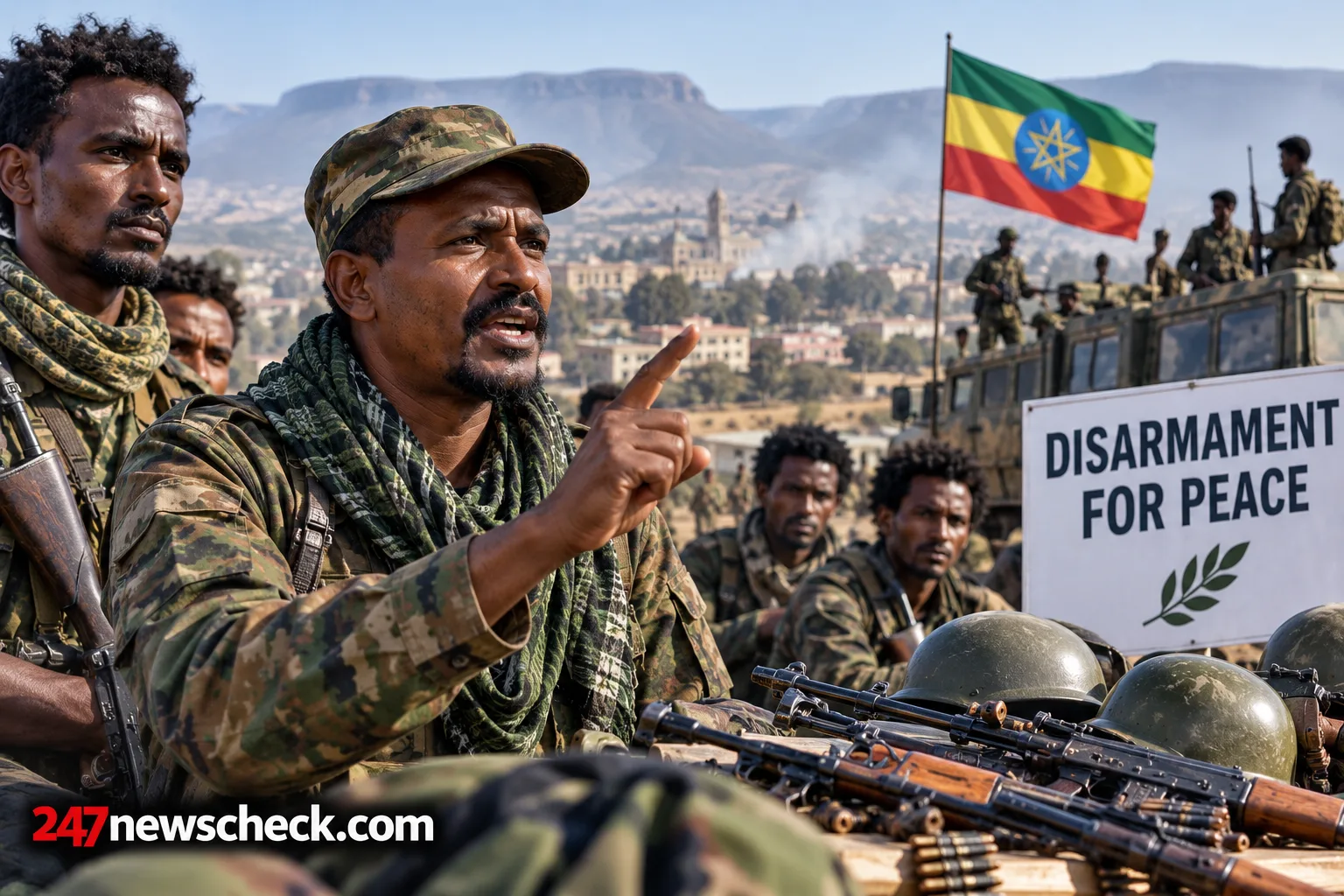
Redae Halefom Woldeselassie, a senior official in Tigray’s caretaker administration, appealed to fighters to abandon armed resistance and return to civilian life. He also encouraged them to participate in a disarmament and reintegration process, arguing that continued fighting would not serve the wider interests of the region’s population.
His appeal followed a statement by Lieutenant General Fisseha Kidanu, identified in a broadcast by Tigray Broadcast Media as commander of the Tigray army. Fisseha called on local militias and volunteers to resist government-allied forces and pursue military action against positions held by their opponents.
The commander’s remarks indicated that the loss of key territory had not ended the armed resistance. However, claims made by the opposing sides about battlefield successes and military losses have not all been independently verified.
Loss of Mekelle Raises Stakes
The latest developments follow the withdrawal of forces aligned with the Tigray People’s Liberation Front (TPLF) from Mekelle, the regional capital. Government-allied fighters entered the city on October 4, marking a significant setback for the TPLF and changing the balance of control in the region.
Ethiopia’s government subsequently established a caretaker administration with a six-month mandate. Its stated priorities include restoring public services, supporting displaced residents who wish to return home, improving security and preparing for elections.
The administration faces considerable challenges, including divisions among Tigrayan political and military groups. Government allies include the Tigray Peace Force, which comprises former members of the TPLF’s armed wing. These divisions complicate efforts to establish a stable security arrangement and achieve a lasting political settlement.
Although the caretaker administration has presented disarmament as a route towards civilian life and recovery, the commander’s call for continued resistance suggests that a peaceful transition remains uncertain.
Pretoria Peace Agreement Under Pressure
The renewed confrontation threatens the November 2022 Pretoria agreement, which brought an end to the major phase of the 2020–2022 war between Ethiopia’s federal government and Tigrayan forces.
The conflict caused widespread destruction, displacement and severe humanitarian suffering. Research cited in international reporting has estimated that the war resulted in hundreds of thousands of deaths, although estimates vary according to the methodology and period examined.
Ethiopian Prime Minister Abiy Ahmed has accused the TPLF of failing to disarm and of forcibly recruiting young people. The accusations reflect the government’s position in the dispute; they should not be treated as independently established findings in every individual case.
The continuing disagreement over disarmament, security arrangements and political authority has become a major obstacle to restoring confidence in the peace process.
Reports of Civilian Casualties Add to Concerns
The security situation has also raised concerns about the safety of civilians. Two wounded men receiving treatment in Mekelle told the Associated Press that a strike near the city killed four people and injured about six others while they were loading goats onto a truck.
The reported casualties and responsibility for the strike could not be independently confirmed. The account therefore remains a reported incident rather than a fully verified determination of what happened or who was responsible.
Any further escalation could increase the risks facing residents, disrupt access to essential services and complicate plans to support displaced families returning to their communities.
What Comes Next for Tigray?
The immediate outlook will depend on whether the caretaker administration can translate its disarmament appeal into a credible process and whether armed groups are willing to pursue political engagement rather than continued confrontation.
That process is likely to require security guarantees, functioning public services, humanitarian support and meaningful efforts to address the concerns of communities affected by the conflict. Calls to surrender weapons alone may not resolve the political and security disputes driving the renewed violence.
For residents of Tigray, the central question remains whether the change in territorial control will lead to greater stability or usher in another period of prolonged conflict.
247NewsCheck.com will continue to follow developments in Ethiopia’s Tigray region, including verified updates on disarmament efforts, civilian safety and the prospects for restoring the peace process.